Report an issue
Tell us what's wrong and we'll take a look.
Thanks – we got it. We'll review and follow up if needed.
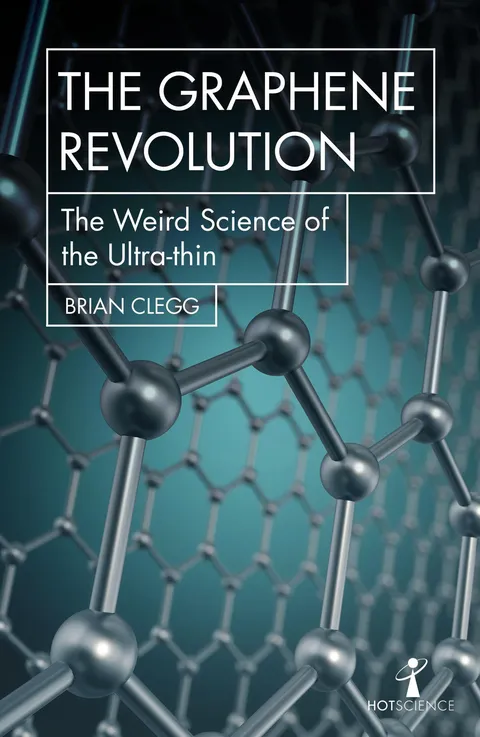
In 2003, Russian physicists Andre Geim and Konstantin Novoselov found a way to produce graphene – the thinnest substance in the world – by using sticky tape to separate an atom-thick layer from a block of graphite.
Their efforts would win the 2010 Nobel Prize for Physics, and now the applications of graphene and other ‘two-dimensional’ substances form a worldwide industry.
Graphene is far stronger than steel, a far better conductor than any metal, and able to act as a molecular sieve to purify water. Electronic components made from graphene are a fraction of the size of silicon microchips and can be both flexible and transparent, making it possible to build electronics into clothing, produce solar cells to fit any surface, or even create invisible temporary tattoos that monitor your health.
Ultra-thin materials give us the next big step forward since the transistor revolutionised electronics. Get ready for the graphene revolution.








Why Readwise Books?
Readwise Books is an ebook & audiobook platform that automatically logs how much you and your friends read, making it fun and easy to read more. Learn more →