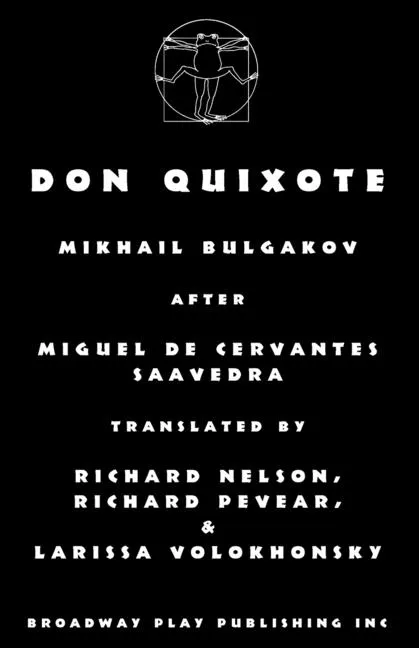
Don Quixote
Report an issue
Tell us what's wrong and we'll take a look.
Thanks – we got it. We'll review and follow up if needed.
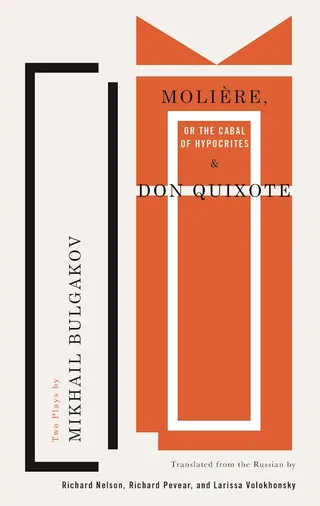
Mikhail Bulgakov's brilliantly theatrical and highly personal adaptation of Cervantes classic novel is here translated for the first time into English by the renowned translators, Richard Pevear and Larissa Volokhonksy (winner of two PEN/Book-Of-The-Month Translation Awards) and the playwright/director, Richard Nelson (Tony Award, Olivier Award).
"Since you hear my voice, it means I'm still alive." [ACT ONE]
"Where there's music, there's no evil." [ACT THREE]
"He has deprived me of the most precious gift a man is endowed with-he has deprived me of my freedom!" [ACT FOUR]
"For Bulgakov, theater was...a place full of naïve magic and mystery."
Anatoly Smeliansky, Is Comrade Bulgakov Dead?
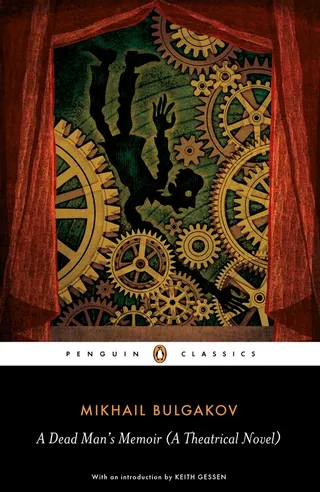
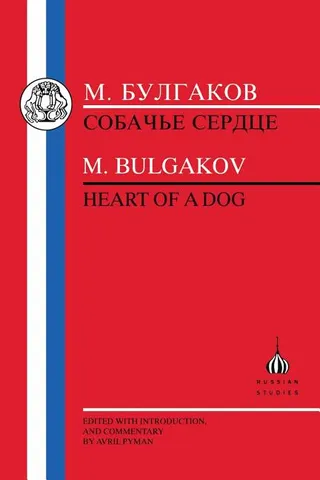
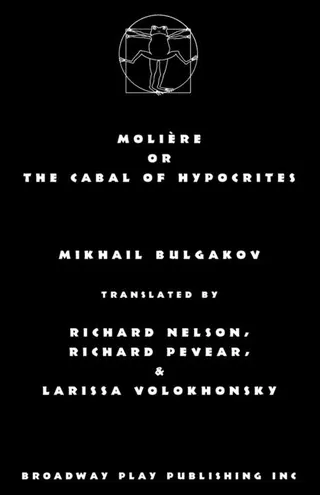
Mikhail Bulgakov
Mikhail Bulgakov was born in 1891 in Kiev, in present-day Ukraine. He first trained in medicine but gave up his profession as a doctor to pursue writing. He started working on The Master and Margarita in 1928 but due to censorship it was not published until 1966, more than twenty-five years after Bulgakov’s death.
More by Mikhail Bulgakov
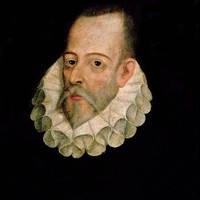
Miguel de Cervantes
Miguel de Cervantes was born on September 29, 1547, in Alcala de Henares, Spain. At twenty-three he enlisted in the Spanish militia and in 1571 fought against the Turks in the Battle of Lepanto, where a gunshot wound permanently crippled his left hand. He spent four more years at sea and then another five as a slave after being captured by Barbary pirates. Ransomed by his family, he returned to Madrid but his disability hampered him; it was in debtor's prison that he began to write Don Quixote. Cervantes wrote many other works, including poems and plays, but he remains best known as the author of Don Quixote. He died on April 23, 1616.


Why Readwise Books?
Readwise Books is an ebook & audiobook platform that automatically logs how much you and your friends read, making it fun and easy to read more. Learn more →