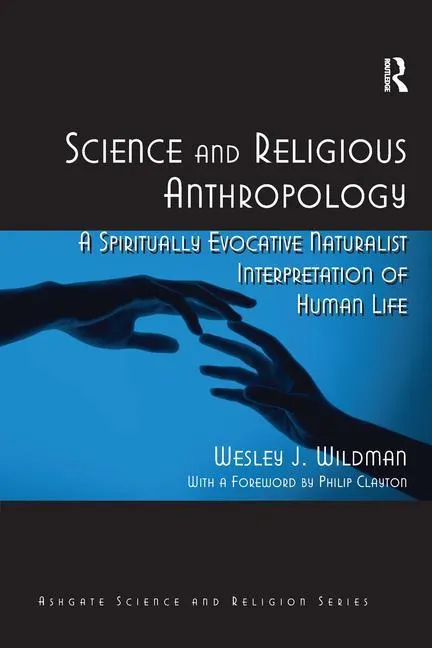
Science and Religious Anthropology
A Spiritually Evocative Naturalist Interpretation of Human Life
Report an issue
Tell us what's wrong and we'll take a look.
Thanks – we got it. We'll review and follow up if needed.
Science and Religious Anthropology explores the convergence of the biological sciences, human sciences, and humanities around a spiritually evocative, naturalistic vision of human life. The disciplinary contributions are at different levels of complexity, from evolution of brains to existential longings, and from embodied sociality to ecosystem habitat. The resulting interpretation of the human condition supports some aspects of traditional theological thinking in the world's religious traditions while seriously challenging other aspects. Wesley Wildman draws out these implications for philosophical and religious anthropology and argues that the modern secular interpretation of humanity is most compatible with a religious form of naturalistic humanism. This book resists the reduction of meaning and value questions while taking scientific theories about human life with full seriousness. It argues for a religious interpretation of human beings as bodily creatures emerging within a natural environment that permits engagement with the valuational potentials of reality. This engagement promotes socially borne spiritual quests to realize and harmonize values in everything human beings do, from the forging of cultures to the crafting of personal convictions.
Wesley J Wildman
Wesley J. Wildman is Professor of Philosophy, Theology, and Ethics in Boston University's School of Theology, an ordained minister in the Uniting Church of Australia, and occasional teacher of preaching. He has written numerous books presenting a radical mystical theological understanding of ultimate reality, including most recently In Our Own Image: Anthropomorphism, Apophaticism, and Ultimacy (2017) and Effing the Ineffable: Existential Mumblings at the Limits of Language (2018).
More by Wesley J Wildman



Why Readwise Books?
Readwise Books is an ebook & audiobook platform that automatically logs how much you and your friends read, making it fun and easy to read more. Learn more →