Report an issue
Tell us what's wrong and we'll take a look.
Thanks – we got it. We'll review and follow up if needed.
Joy Is Fundamental to Who We Are
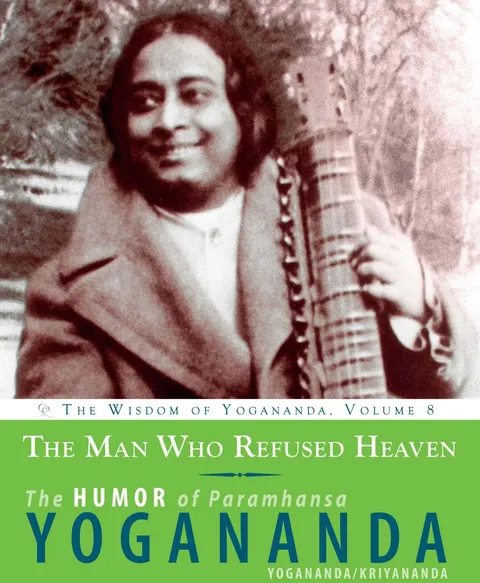
Paramhansa Yogananda translated the classic definition of God given by Swami Shankarananda, “Sat-chid-ananda,” as, “Ever-existing, ever-conscious, ever-new joy.” Yogananda added the concept of “new” to the ancient definition.
Yogananda explained that God became His creation, which means that all of life exists, is conscious, and has the quality of joy innately within it. This is why human beings universally seek happiness. It is our nature to be happy, and the search for happiness motivates everyone. A master is one who has united his consciousness with Satchidananda, and so you see in the masters profound joy. Some share this joy outwardly through their personalities; others may be more serious outwardly, but great joy sparkles in their eyes and is felt in their presence.
Yogananda's experience of life, his experience of the goal of all life, was filled with joy. He lived in joy always, and sought to awaken it in others. Though he could be intensely serious and deep as appropriate, he also could express the greatest joy, often in unexpected situations.
The humor in The Man that Refused Heaven arose spontaneously from Yogananda's deep joy. Sometimes he used humor to express an important spiritual principle. Sometimes he used it in training the disciples, to help them learn in a way that reasoned lectures could never achieve.
Most of the humor in this book was taken from Yogananda's writings. Also included are experiences with the master that demonstrate his playful spirit. These were written by Swami Kriyananda, from his years of being trained personally by Yogananda, or from stories that were shared with him by other close disciples.
The message of this book is both playful and serious. The serious message is that joy can be found within us always. We should look for it there and share it with others.
Paramhansa Yogananda
Paramhansa Yogananda
Born in India in 1893, Paramhansa Yogananda was trained from his early years to bring India’s ancient science of Self-realization to the West. In 1920 he moved to the United States to begin what was to develop into a worldwide work touching millions of lives. Americans were hungry for India’s spiritual teachings, and for the liberating techniques of yoga.
In 1946 he published what has become a spiritual classic and one of the best-loved books of the 20th century, Autobiography of a Yogi. In addition, Yogananda established headquarters for a worldwide work, wrote a number of books and study courses, gave lectures to thousands in most major cities across the United States, wrote music and poetry, and trained disciples. He was invited to the White House by Calvin Coolidge, and he initiated Mahatma Gandhi into Kriya Yoga, his most advanced technique of meditation.
Yogananda’s message to the West highlighted the unity of all religions, and the importance of love for God combined with scientific techniques of meditation.
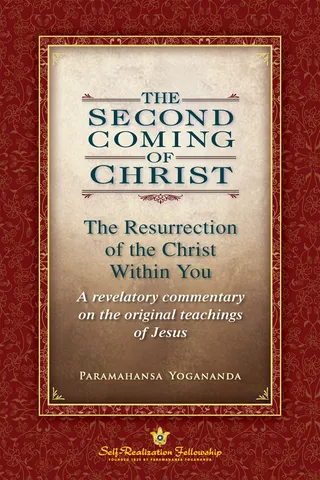
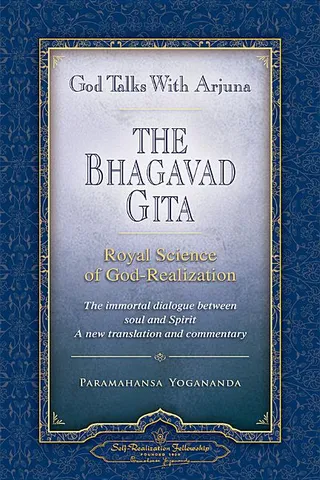
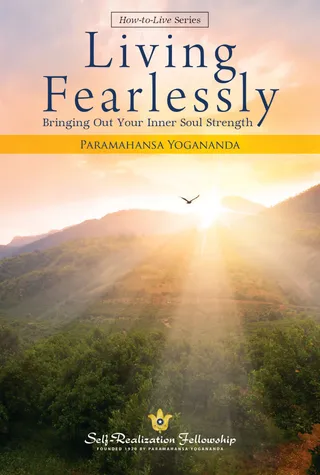
More by Paramhansa Yogananda





Swami Kriyananda
One of the foremost spiritual teachers of Yoga principles in the world. In 1948, at the age of twenty-two, he became a disciple of the Indian yoga master and world teacher, Paramhansa Yogananda (author of the classic, Autobiography of a Yogi). At Yogananda’s request, Swami Kriyananda devoted his life to teaching and writing, and helping others to experience the joy and living presence of God within. Over the course of more than sixty years, he lectured on four continents in seven languages. His television programs, audio and video recordings of his talks and music, and his many books in twenty-eight languages have touched the lives of millions.
Swami Kriyananda took the ancient teachings of Raja Yoga and made them intensely practical and immediately useful for people in every walk of life, on a daily basis. His books and teachings cover nearly every field of human endeavor, including spiritualizing business life, leadership, education, the arts, community life, and science. He wrote extensive commentaries on the Bible and the Bhagavad Gita.
Swami Kriyananda was also known as the “father of the intentional communities movement,” which began in the United States in the late 1960s. Inspired by his guru’s dream of establishing spiritual communities, in 1968 he founded the first of what are now ten Ananda communities worldwide. They provide a supportive environment of “simple living and high thinking,” where a thousand full-time residents live, work, and worship together. “The time has come for people to live lives of even higher dedication than that which inspired monks and nuns of the past. . . . The time has come for people to direct their spiritual awareness also downward into matter . . . to everything they do: their work, to education, to family life, to friendship, to their communications with strangers, to the way they build their homes — to all the most mundane, practical aspects of daily, human life."
“Men need now to become God-centered from within, and from that center to see God everywhere, in everything.” — Cities of Light by Swami Kriyananda (J. Donald Walters)
More by Swami Kriyananda




Why Readwise Books?
Readwise Books is an ebook & audiobook platform that automatically logs how much you and your friends read, making it fun and easy to read more. Learn more →