Report an issue
Tell us what's wrong and we'll take a look.
Thanks – we got it. We'll review and follow up if needed.
WikiLeaks is famous—or infamous—for publishing secret material, including classified government documents, confidential videos and emails, and information leaked by whistleblowers, some of them anonymous, others revealing their identities. WikiLeaks claims to have compiled a database of more than ten million “forbidden” documents. Its founder and leader, Australian activist Julian Assange proclaims that the public is entitled to the truth and that “information wants to be free.”
WikiLeaks activities have polarized opinion, with some claiming its operations are traitorous and harmful, and others defending its releases as necessary exposure of wrongdoing.
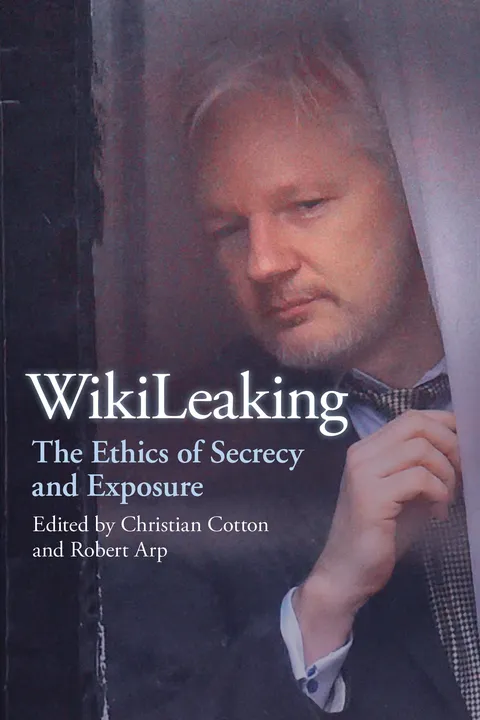
In WikiLeaking: The Ethics of Secrecy and Exposure, professional philosophers with diverse opinions and backgrounds deliver their provocative insights into WikiLeaks.
● If leaking secrets sometimes causes harm, can this harm be outweighed by the benefit of more people knowing the truth?
● How much of WikiLeaks information is true, and does it matter that some of it might be erroneous or misleading through lack of context?
● Is the prevalence of leaking an automatic outcome of the value of free expression, as enshrined in the First Amendment?
● If it’s wrong to lie, does this imply that it’s always right to speak the truth?
● Does selective media bias require to be countered by unpredictable leaking?
● Can there be too much information? And if so, how can citizens protect themselves against information overload?
● WikiLeaks activists are guided by a code of ethics. How does this compare with the professional ethics of conventional journalists?
● When French politician Emmanuel Macron included deliberate falsehoods in his emails, knowing they would be leaked, he showed the relation between leaking and “bullshit,” as defined by Harry Frankfurt. Can we expect the prevalence of leaking to increase the volume of bullshit?
● The existence of government necessitates the practice of subterfuge and double-dealing by statesmen, but the culture of democracy calls for transparency. How can we fix the boundary between necessary deception and the public’s “right to know”?
● Leaking exposes what some powerful person wants to be kept secret. Is leaking always justified whenever that person wants to keep their own immoral actions secret, and is leaking not justified when the keeper of secrets has done nothing wrong?
Christian Cotton
Christian Cotton is an independent scholar and freelance author. He has been a philosophy instructor at Piedmont College and the University of Georgia.
Robert Arp
Robert Arp is Adjunct Professor of Philosophy at Maple Woods College and Johnson County Community College, in the Kansas City area. He has attained a PhD in Philosophy from Saint Louis University, and specializes in the philosophy of biology, the philosophy of mind, and modern philosophy. A member of The American Philosophical Association and The Philosophy of Science Association, Robert Arp has written numerous articles, book chapters, and books, and is the editor of South Park and Philosophy (Blackwell Publishing, 2006), the co-editor of Contemporary Debates in Philosophy of Biology (Wiley-Blackwell, 2009), and the author of An Integrated Approach to the Philosophy of Mind (Cambridge University Press, 2010). In 2013 he was general editor of 1001 Ideas That Changed The Way We Think. See his website at robertarp.com


Why Readwise Books?
Readwise Books is an ebook & audiobook platform that automatically logs how much you and your friends read, making it fun and easy to read more. Learn more →