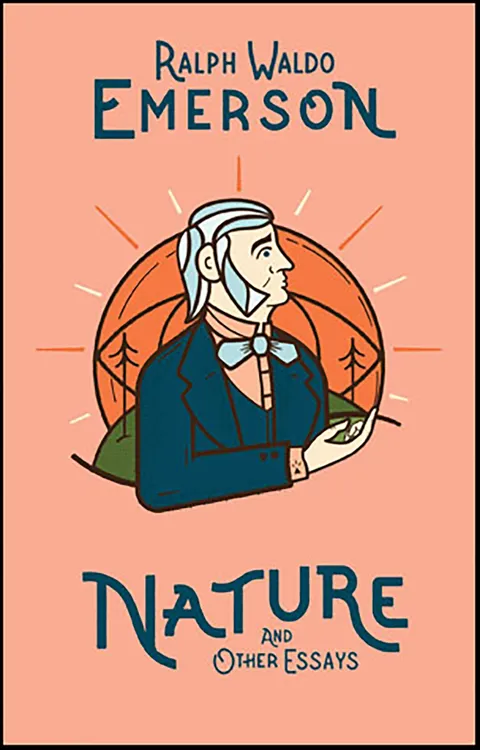
Nature and Other Essays
Report an issue
Tell us what's wrong and we'll take a look.
Thanks – we got it. We'll review and follow up if needed.


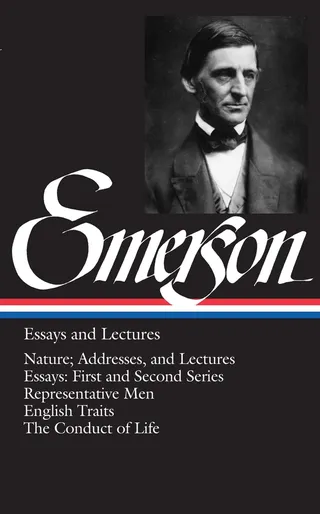
Ralph Waldo Emerson's famous essay "Nature" declared that understanding nature was the key to understanding God and reality, and laid the groundwork for transcendentalism. His legacy of boldly questioning the doctrine of his day and connecting with nature will resonate with today's readers in search of meaning and enlightenment. Essays include "Nature" (1836) and Emerson's first series, published in 1841: "History," "Self-Reliance," "Compensation," "Spiritual Laws," "Love," "Friendship," "Prudence," "Heroism," "The Over-Soul," "Circles," "Intellect," and "Art." Nature and Other Essays joins Gibbs Smith's best-selling Wilderness series. Standing beside the works of his protégée Henry David Thoreau, as well as John Muir, Mark Twain, Walt Whitman, and Jack London, these essays are reissued to encourage and inspire philosophers, travelers, campers, and contemporary naturalists.
Ralph Waldo Emerson
Ralph Waldo Emerson (1803-1882) was an American essayist, poet, philosopher, lecturer, and leading figure of the Transcendentalist movement. Born in Boston, Massachusetts, he became one of the most influential intellectual voices of nineteenth-century America. His writings explore individualism, self-reliance, nature, spirituality, human potential, morality, and the relationship between humanity and the universe. Through his essays, lectures, poems, and philosophical reflections, Emerson encouraged independent thinking and personal growth. His best-known works include Nature, Self-Reliance, The American Scholar, Essays: First Series, Essays: Second Series, Representative Men, and The Conduct of Life. His ideas continue to influence American literature, philosophy, and spiritual thought.
More by Ralph Waldo Emerson


Why Readwise Books?
Readwise Books is an ebook & audiobook platform that automatically logs how much you and your friends read, making it fun and easy to read more. Learn more →