Report an issue
Tell us what's wrong and we'll take a look.
Thanks – we got it. We'll review and follow up if needed.
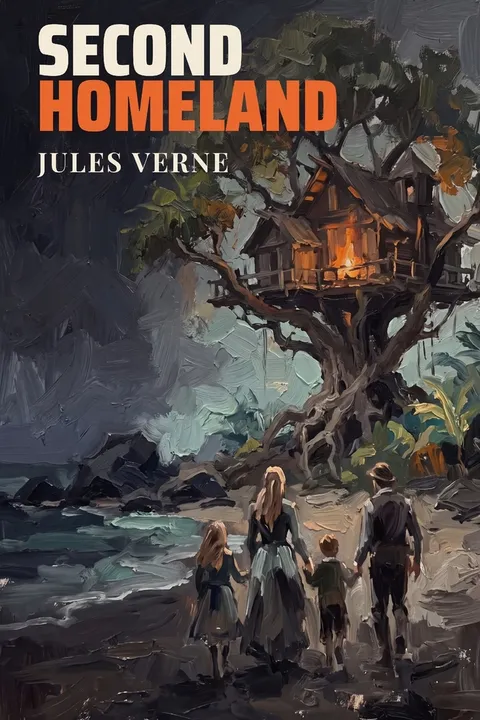
The Robinson family established their island paradise. Now Jules Verne asks: what comes next?
Decades after Johann David Wyss's beloved Swiss Family Robinson ended, Jules Verne provides an authorized sequel. The shipwrecked family has successfully settled their island, but new challenges await: encounters with other castaways, expansion of agricultural and technological capabilities, and eventual decisions about whether to remain isolated or return to European civilization.
Verne characteristically adds scientific and technical detail Wyss hadn't provided-elaborate explanations of construction methods, systematic approaches to agriculture, greater attention to the island's ecology. He attempts to ground the survival story in more realistic constraints while maintaining the didactic tradition of teaching practical knowledge through adventure.
Yet Second Homeland, published in 1900 when Verne was seventy-two, reveals the creative decline marking his final years. The characterization remains thin (family members are types representing virtues rather than psychologically complex individuals). The plotting is episodic and repetitive (challenge faced, solved through ingenuity, temporary success, next challenge). The technical descriptions interrupt rather than enhance narrative flow. The whole enterprise feels more like dutiful assignment than inspired creation.
Questions about authorship complicate interpretation-Verne's son Michel increasingly managed his father's literary affairs during these years, and scholars debate how much represents Jules's actual writing versus Michel's completion or revision.
Contemporary critics found it competent but unnecessary-a belated sequel to work that hadn't needed continuation, adding technical detail without genuine development. Modern readers will likely agree: professional competence without distinctive vision, dutiful elaboration of someone else's imaginative creation.
From the author of Twenty Thousand Leagues Under the Sea-a late work showing how even talented writers struggle when elaborating others' creations rather than developing their own.
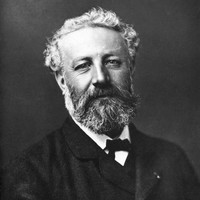
Jules Verne
Jules Verne (1828-1905) is considered by many the father of science fiction. Born in Nantes, France, he studied law but turned to writing opera libretti until the 1863 publication of Five Weeks in a Balloon, the first of his Extraordinary Voyages series. Its success encouraged him to produce a number of classic and prophetic science fiction novels, including Journey to the Center of the Earth and Twenty Thousand Leagues under the Sea. His stories foresaw many scientific and technological developments, including the submarine, television, and space travel.
More by Jules Verne



Why Readwise Books?
Readwise Books is an ebook & audiobook platform that automatically logs how much you and your friends read, making it fun and easy to read more. Learn more →