Report an issue
Tell us what's wrong and we'll take a look.
Thanks – we got it. We'll review and follow up if needed.
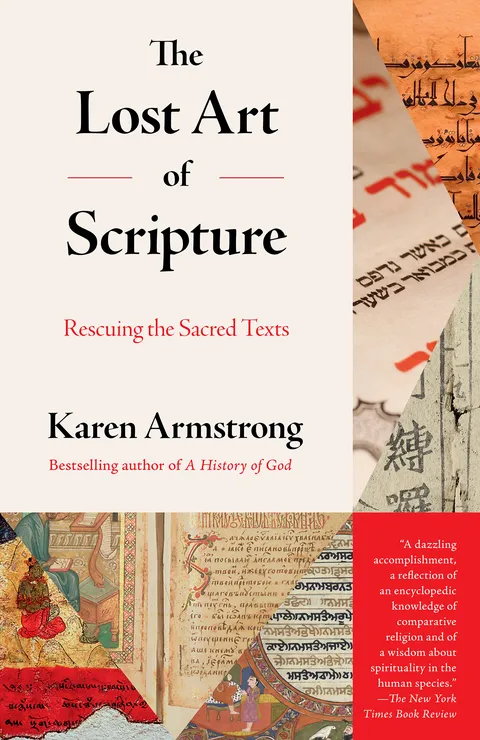
A book that shines fresh light on the world's major religions to help us build bridges between faiths and rediscover a creative and spiritual engagement with holy texts—from the New York Times bestselling author of A History of God
“[An] unusual, often dazzling, blend of theology, history, and neuroscience” —The New Yorker
The significance of scripture may not be immediately obvious in our secular world, but its misunderstanding is perhaps the root cause of many of today's controversies. The sacred texts have been co-opted by fundamentalists, who insist that they must be taken literally, and by others who interpret scripture to bolster their own prejudices. These texts are seen to prescribe ethical norms and codes of behavior that are divinely ordained: they are believed to contain eternal truths. But as Karen Armstrong shows in this chronicle of the development and significance of major religions, such a narrow, peculiar reading of scripture is a relatively recent, modern phenomenon. For most of their history, the world's religious traditions have regarded these texts as tools that enable the individual to connect with the divine, to experience a different level of consciousness, and to help them engage with the world in more meaningful and compassionate ways.
Karen Armstrong
Karen Armstrong was born in Worcestershire. After becoming a nun in the 1960s, she left her order and lectured in literature at London University before becoming a full time writer, broadcaster and international adviser on religious and political affairs. She has addressed US Congress, the UN and Canadian parliament on Islam and fundamentalism. Among her other books is the bestselling ‘History of God’.
More by Karen Armstrong




Why Readwise Books?
Readwise Books is an ebook & audiobook platform that automatically logs how much you and your friends read, making it fun and easy to read more. Learn more →