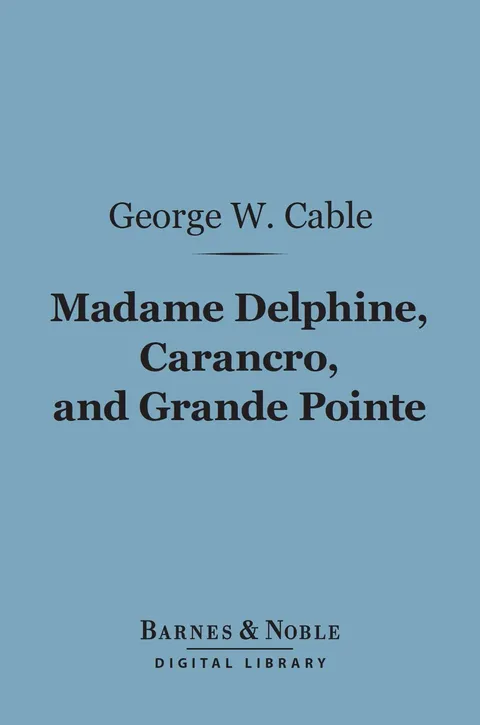
Madame Delphine, Carancro, and Grande Pointe (Barnes & Noble Digital Library)
Report an issue
Tell us what's wrong and we'll take a look.
Thanks – we got it. We'll review and follow up if needed.
These three tales are drawn from George W. Cable’s youth in New Orleans. Madame Delphine is filled with the exoticism of Creole culture and tells the story of an elderly woman and her attempt to arrange an advantageous marriage for her light-skinned daughter by passing her off as white. In Carancro, Cable shifts the focus to the simple rural lives of Cajun families. Grande Pointe casts Creole society in a harsher light—as it supplants the older Cajun culture of southern Louisiana.
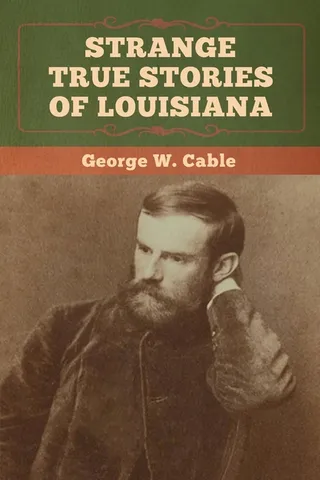
George Washington Cable
George Washington Cable was an American novelist recognized for his vivid portrayals of Creole life in New Orleans, Louisiana, his hometown. Born on October 12, 1844, in New Orleans, he became a leading figure in American literature, particularly in the realm of realism. His works often focused on the complexities of southern society during the 19th century. Cable s contributions to literature earned him the title of "the most important southern artist working in the late 19th century," and he was also regarded as "the first modern Southern writer." His ability to depict the intricate dynamics of race, class, and culture in the South set him apart from his contemporaries. Cable s most famous works include The Grandissimes and Dr. Sevier. He passed away on January 31, 1925, in St. Petersburg, Florida, at the age of 80. His legacy as a prominent literary figure continues to influence Southern literature, especially with his rich, complex depictions of New Orleans and its people.
More by George Washington Cable






Why Readwise Books?
Readwise Books is an ebook & audiobook platform that automatically logs how much you and your friends read, making it fun and easy to read more. Learn more →