Report an issue
Tell us what's wrong and we'll take a look.
Thanks – we got it. We'll review and follow up if needed.
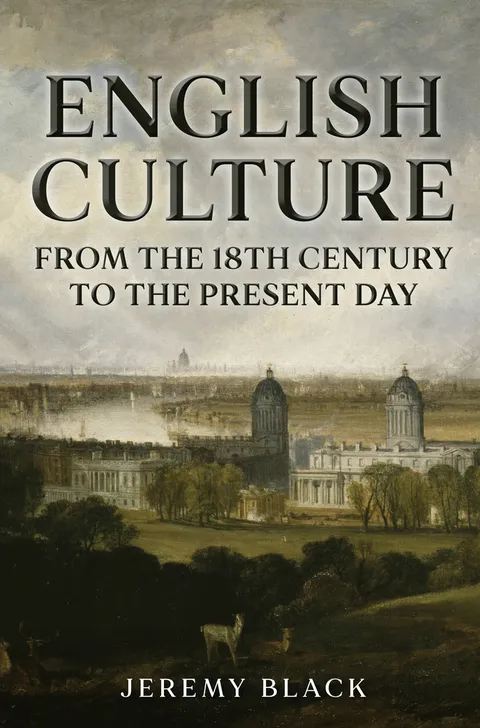
Culture. What is it? Paintings or television? The National Gallery or Harry Styles? There is of course no one answer, no agreement. But what is clear is that culture, however defined, plays a key role as a form and content of identity, while, in turn, it is affected by changes in the patterns and pressures of identification. In Emma, Jane Austen praised Shakespeare as a touchstone of Englishness and wrote: 'It was a sweet view - sweet to the eye and the mind. English verdure, English culture, English comfort, seen under a sun bright, without being oppressive.' Would anyone today write the same words without irony? Professor Black charts the changes in English culture over three centuries.
Turnpikes, steam engines, canals, novels, landscape gardens, Adam Smith et al were scarcely indicators of an unchanging world; but Jeremy Black points out that the early period analyzed was profoundly historic. The historical bent of the years from the Glorious Revolution to the Great Reform Act could be found in thought, religion, politics, law, society, literature, art, architecture, music, sculpture, and much else, and was true at all levels of society. And history still defines England today, even in its denial or rejection, with the destruction of monuments. History was presented as moving in an inevitable direction, one of steady improvement, a teleological progressivism. Black observes that' In the eighteenth century, the public market for an explicitly English engagement with English culture and history became far stronger, in turn creating models for the future. Even if a shared inheritance, the past was interpreted to emphasize Englishness.' Then what happened?
Jeremy Black
Jeremy Black has recently retired as Professor of History at the University of Exeter. Graduating from Cambridge with a starred first, he did postgraduate work at Oxford and then taught at Durham, eventually as professor, before moving to Exeter in 1996. He has lectured extensively in Australia, Canada, Denmark, France, Germany, Italy, New Zealand, and the United States, where he has held visiting chairs at West Point, Texas Christian University, and Stillman College. He was appointed to the Order of Membership of the British Empire for services to stamp design. His books include The British Seaborne Empire, Contesting History and Rethinking World War Two.
More by Jeremy Black



Why Readwise Books?
Readwise Books is an ebook & audiobook platform that automatically logs how much you and your friends read, making it fun and easy to read more. Learn more →