Report an issue
Tell us what's wrong and we'll take a look.
Thanks – we got it. We'll review and follow up if needed.
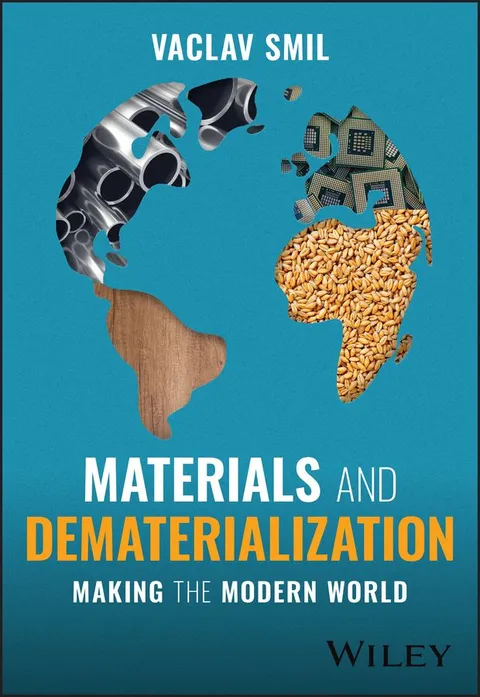
World-renowned scientist Vaclav Smil examines a critical topic in the research and policy domain of sustainable resource use
Over the course of time, the modern world has become dependent on unprecedented flows of materials. Now even the most efficient production processes and the highest practical rates of recycling may not be enough to result in dematerialization rates that would be high enough to negate the rising demand for materials generated by continuing population growth and rising standards of living.
Materials and Dematerialization considers the principal materials used throughout history, from wood and stone, through to metals, alloys, plastics and silicon, describing their extraction and production as well as their dominant applications. The evolving productivities of material extraction, processing, synthesis, finishing and distribution, and the energy costs and environmental impact of rising material consumption are examined in detail, along with the relationship between socio-economic development and resource use, including major technological and innovation aspects. The book concludes with an outlook for the future, discussing the prospects for dematerialization, potential constraints on materials, and an updated appraisal of material requirements and prospects during the coming decades.
Building on the success of his 2013 book, Vaclav Smil has thoroughly revised this landmark text to highlight advances that have taken place over the last decade, including a thorough review of statistics and references to 2022. This updated edition also includes new content to explicitly address material for global energy transition and for securing food for a still growing global population.
Praise for the 1st edition
“Vaclav Smil keeps turning out amazing books. Making the Modern World, I just finished, and it’s pretty fantastic.” (Interview with Bill Gates, January 2014)
Vaclav Smil
Vaclav Smil is Distinguished Professor Emeritus at the University of Manitoba. He is the New York Times bestselling author of How the World Really Works, as well as more than forty other books on topics including energy, environmental and population change, food production and nutrition, technical innovation, risk assessment, and public policy. A Fellow of the Royal Society of Canada, he has been named by Foreign Policy as one of the Top 100 Global Thinkers.
More by Vaclav Smil


Why Readwise Books?
Readwise Books is an ebook & audiobook platform that automatically logs how much you and your friends read, making it fun and easy to read more. Learn more →