Report an issue
Tell us what's wrong and we'll take a look.
Thanks – we got it. We'll review and follow up if needed.
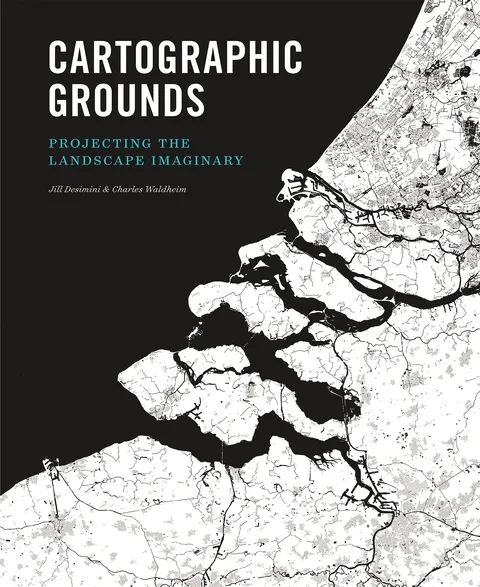
Mapping has been one of the most fertile areas of exploration for architecture and landscape in the past few decades. While documenting this shift in representation from the material and physical description toward the depiction of the unseen and often immaterial, Cartographic Grounds takes a critical view toward the current use of data mapping and visualization and calls for a return to traditional cartographic techniques to reimagine the manifestation and manipulation of the ground itself.
Each of the ten chapters focuses on a single cartographic technique—sounding/spot elevation, isobath/contour, hachure/hatch, shaded relief, land classification, figure-ground, stratigraphic column, cross-section, line symbol, conventional sign—and illustrates it through beautiful maps and plans from notable designers and cartographers throughout history, from Leonardo da Vinci to James Corner Field Operations. Mohsen Mostafavi, dean of the Harvard Graduate School of Design, introduces the book.
Charles Waldheim
Charles Waldheim is an architect and urbanist whose research examines the relationships between landscape, ecology, and contemporary urbanism. Waldheim is John E. Irving Professor of Landscape Architecture at the Harvard University Graduate School of Design where he directs the Office for Urbanization.
Jil Desimini
Jill Desimini is an assistant professor of landscape architecture at Harvard University Graduate School of Design.


Why Readwise Books?
Readwise Books is an ebook & audiobook platform that automatically logs how much you and your friends read, making it fun and easy to read more. Learn more →