Report an issue
Tell us what's wrong and we'll take a look.
Thanks – we got it. We'll review and follow up if needed.
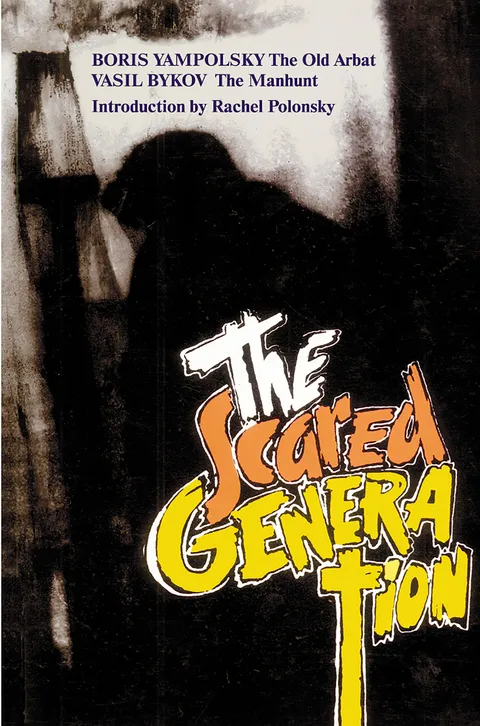
Two short novels by major 20th-century Russian authors. The Old Arbat by Boris Yampolsky examines the inner state of a hunted man, his fears and his loneliness as he wanders around Moscow trying to escape the shadowing KGB. Unlike Dostoevsky’s Raskolnikov, however, Yampolsky’s hero is innocent. Like Yampolsky himself, the hero saw action in World War II, but now, in this late Stalinist atmosphere of witchhunting and political intolerance, he is paralysed by uncontrollable terror. Yet at some point his hopelessness produces an inner freedom which gives the hunted man strength to resist, and a remedy for overcoming fear. In The Manhunt by Vasil Bykov, a dispossessed peasant returns in secret from his Siberian exile to his home village in Belarus. The local Cheka, headed by his own son, is hunting him. As he walks towards his old house he looks back on his whole life. Bykov has always been preoccupied with the problem of retaining humanity in inhuman conditions, and the problem of moral choice versus personal safety. Considering the current situation in Russia and in Belarus, together these novels are more relevant today than ever before.

John Dewey
Translated by
John Dewey was the most famous teacher of philosophy in the early twentieth century, and he was known for his lifelong work to reform America’s educational system. Dewey was born in Burlington, Vermont, in 1859 to strict Calvinist parents. After graduating from the University of Vermont, Dewey taught high school and studied philosophy in his spare time. He finished his doctorate degree at Johns Hopkins University and continued to teach at various universities around the country, finally landing at Columbia University. While in New York, Dewey became involved in political groups and founded what would become the progressive education movement, which purported that students should learn to think for themselves to become active participants of a democratic society. He was also a founding member of the NAACP and ACLU. At this time, Dewey was influenced by Karl Marx, and after traveling to different countries to study their educational systems, praised Soviet education and came under scrutiny in the United States. Dewey continued his political and philosophical efforts until his death in 1952.


Why Readwise Books?
Readwise Books is an ebook & audiobook platform that automatically logs how much you and your friends read, making it fun and easy to read more. Learn more →