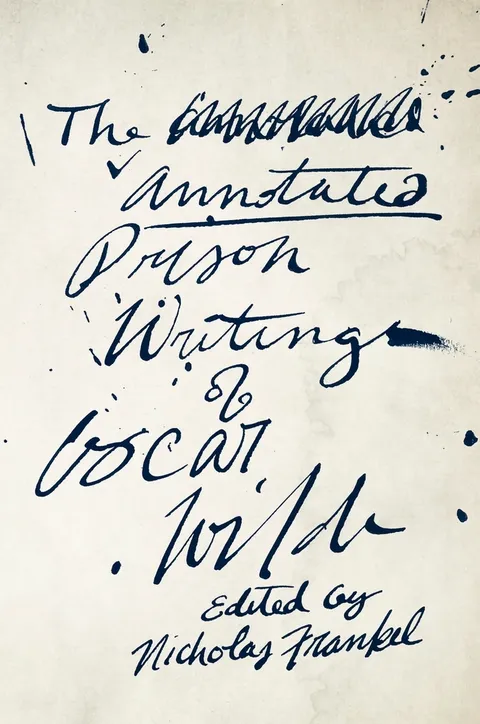
The Annotated Prison Writings of Oscar Wilde
Report an issue
Tell us what's wrong and we'll take a look.
Thanks – we got it. We'll review and follow up if needed.
"And I? May I say nothing, my lord?" With these words, Oscar Wilde's courtroom trials came to a close. The lord in question, High Court justice Sir Alfred Wills, sent Wilde to the cells, sentenced to two years in prison with hard labor for the crime of "gross indecency" with other men. As cries of "shame" emanated from the gallery, the convicted aesthete was roundly silenced.
But he did not remain so. Behind bars and in the period immediately after his release, Wilde wrote two of his most powerful works--the long autobiographical letter De Profundis and an expansive best-selling poem, The Ballad of Reading Gaol. In The Annotated Prison Writings of Oscar Wilde, Nicholas Frankel collects these and other prison writings, accompanied by historical illustrations and his rich facing-page annotations. As Frankel shows, Wilde experienced prison conditions designed to break even the toughest spirit, and yet his writings from this period display an imaginative and verbal brilliance left largely intact. Wilde also remained politically steadfast, determined that his writings should inspire improvements to Victorian England's grotesque regimes of punishment. But while his reformist impulse spoke to his moment, Wilde also wrote for eternity.
At once a savage indictment of the society that jailed him and a moving testimony to private sufferings, Wilde's prison writings--illuminated by Frankel's extensive notes--reveal a very different man from the famous dandy and aesthete who shocked and amused the English-speaking world.
Oscar Wilde
Oscar Fingal O'Flaherty Wills Wilde was born in Dublin in 1854. He studied at Trinity College Dublin and then at Magdalen College Oxford where he started the cult of 'Aestheticism', which involves making an art of life. Following his marriage to Constance Lloyd in 1884, he published several books of stories ostensibly for children and one novel, The Picture of Dorian Gray (1891).
Wilde's first success as a playwright was with Lady Windemere's Fan in 1892. He followed this up with A Woman of No Importance, An Ideal Husband and The Importance of Being Earnest, all performed on the London stage between 1892 and 1895. However Wilde's homosexual relationship with Lord Alfred Douglas was exposed by the young man's father, the Marquis of Queensbury. Wilde brought a libel suit against Queensbury but lost and was sentenced to two year's imprisonment. He was released in 1897 and fled to France where he died a broken man in 1900.
More by Oscar Wilde










Why Readwise Books?
Readwise Books is an ebook & audiobook platform that automatically logs how much you and your friends read, making it fun and easy to read more. Learn more →