Report an issue
Tell us what's wrong and we'll take a look.
Thanks – we got it. We'll review and follow up if needed.
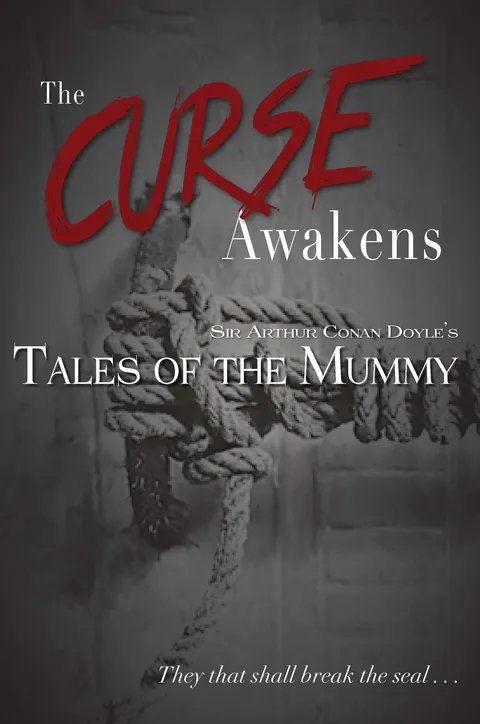
Before the zombie, the werewolf, or the vampire, there was the Mummy. Mummies—linen-wrapped, dried up corpses of pharaohs, queens, priests, musicians, dancers, and everyday people like you and me—lie in maze-like pyramids and tombs. Guarded by jackal-headed Anubis, god of the dead, mummies wait to live for eternity. But if their wait is disturbed, if their tomb treasure is looted, then the Curse of the Mummy falls on the violator. More ruthless than the walking zombie, more brutal than the werewolf’s attack, more terrifying than the vampire’s kiss, the Curse of the Mummy falls without warning and without ending. The Curse of the Mummy is eternal love and eternal hate.
“The Ring of Thoth” and “Lot 249” by Sir Arthur Conan Doyle take us into the heart of the mysteries of the Mummy. Doyle wrote these two stories at the same time he was building the career of his famous consulting detective Sherlock Holmes. These two stories have reached into our own day, directly inspiring the classic horror film The Mummy, starring Boris Karloff, and all the Mummy films that followed. And the mummies in these two stories live on…
Arthur Conan Doyle
Arthur Conan Doyle was born in 1859. He trained to be a doctor at Edinburgh University and eventually set up a medical practice in Southsea. During the quiet periods between patients, he turned his hand to writing, producing historical novels such as Micah Clarke and adventure yarns including The Lost World, as well as four novels and fifty-six stories involving his most celebrated creations, Sherlock Holmes and Dr Watson. Doyle was knighted in 1902. In later life he devoted much of his time to his belief in Spiritualism, using his writing and celebrity as a means of providing funds to support activities in this field. He died in 1930.
More by Arthur Conan Doyle






Why Readwise Books?
Readwise Books is an ebook & audiobook platform that automatically logs how much you and your friends read, making it fun and easy to read more. Learn more →