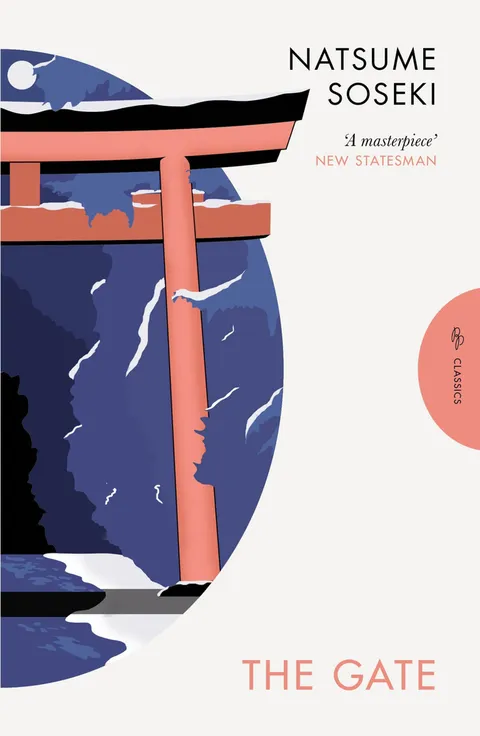
The Gate
Report an issue
Tell us what's wrong and we'll take a look.
Thanks – we got it. We'll review and follow up if needed.
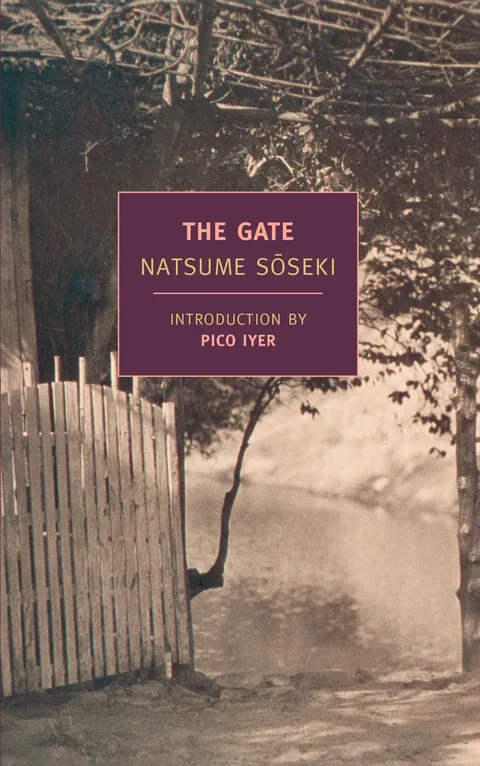
"A sensitive, skillfully written novel by the most widely read Japanese author of modern times." -- Guardian
Deemed the "representative modern Japanese novelist" by Haruki Murakami, Natsume Soseki employs humor and irony with masterful precision in this great novel of indecision, widely considered one of the founding texts of modern Japanese letters.
Humble clerk Sosuke and his wife Oyone live in a modest house at the bottom of a cliff. Having previously been married to another man, Oyone's adultery now seems to hang over their marriage like a curse. With no children and Sosuke's incoming growing ever smaller, they are left with little besides each other and a beautiful painted screen as a souvenir of better days.
Then a series of crises rocks their shabby but harmonious domestic existence. Sosuke's brother moves in with them, demanding help to fund his studies; they find themselves forced to sell the screen to buy winter shoes; and Oyone's ex-husband is rumoured to be visiting a wealthy neighbour at the top of the cliff. On top of that, Sosuke's financial prospects keep getting worse. Beset by reminders of his flaws and failures, Sosuke runs away to a temple, hoping to escape into enlightenment. But can he learn what the monks have to teach him? Will he return to Oyone changed - or not at all?
Natsume Soseki
Nastume Soseki (1867-1916) was born the youngest of eight children during the last year of the Tokugawa shogunate in Edo, the city shortly to be renamed Tokyo, and became the defining writer of the Meiji period (1868-1912). Raised by foster parents until he was nine, he made a faltering start at school but soon displayed a special aptitude for Chinese studies and later for the English language, ultimately earning an advanced degree in English literature. As an undergraduate at Tokyo Imperial University, he published an essay on Walt Whitman that introduced the poet's work to Japan. After teaching for several years, Soseki was sent in 1900 to England for two years by the Ministry of Education. Upon his return he succeeded Lafcadio Hearn in the English department at Tokyo Imperial University. Soseki published his first work of fiction in 1905, the opening chapter of what would become the famous satirical novel I Am a Cat. In 1907, offered a position with the Asahi Newspaper publishing company, he left teaching to become a full-time writer, and proceeded to produce novels at the rate of one a year until his death from a stomach ulcer in 1916. Other major works to have appeared in English translation include Botchan, Kusamakura, The Miner, and Kokoro.
More by Natsume Soseki




Why Readwise Books?
Readwise Books is an ebook & audiobook platform that automatically logs how much you and your friends read, making it fun and easy to read more. Learn more →