Report an issue
Tell us what's wrong and we'll take a look.
Thanks – we got it. We'll review and follow up if needed.
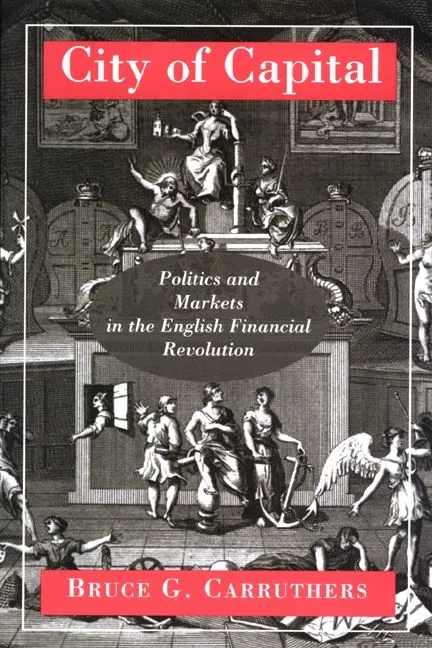
While many have examined how economic interests motivate political action, Bruce Carruthers explores the reverse relationship by focusing on how political interests shape a market. He sets his inquiry within the context of late Stuart England, when an active stock market emerged and when Whig and Tory parties vied for control of a newly empowered Parliament. Carruthers examines the institutional linkage between politics and the market that consisted of three joint-stock companies--the Bank of England, the East India Company, and the South Sea Company--which all loaned large sums to the government and whose shares dominated trading on the stock market. Through innovative research that connects the voting behavior of individuals in parliamentary elections with their economic behavior in the stock market, Carruthers demonstrates that party conflict figured prominently during the company foundings as Whigs and Tories tried to dominate company directorships. For them, the national debt was as much a political as a fiscal instrument.
In 1712, the Bank was largely controlled by the Whigs, and the South Sea Company by the Tories. The two parties competed, however, for control of the East India Company, and so Whigs tended to trade shares only with Whigs, and Tories with Tories. Probing such connections between politics and markets at both institutional and individual levels, Carruthers ultimately argues that competitive markets are not inherently apolitical spheres guided by economic interest but rather ongoing creations of social actors pursuing multiple goals.
Bruce G. Carruthers
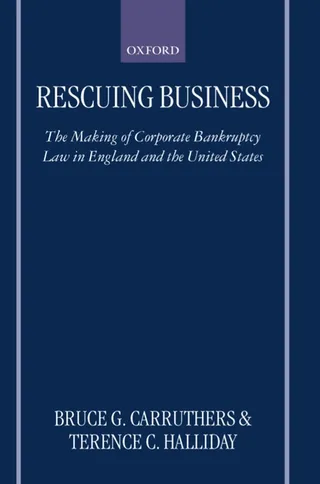
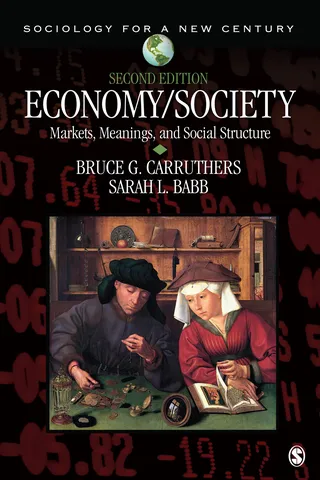
Bruce Carruthers Ph.D. University of Chicago 1991. Areas of interest include historical and comparative sociology, economic sociology, sociology of law and sociology of organizations. Carruthers has written three books, City of Capital Politics and Markets in the English Financial Revolution (Princeton University, 1996), Rescuing Business: The Making of Corporate Bankruptcy Law in England and the United States (Oxford, 1998), and Economy/Society: Markets, Meanings and Social Structure (Pine Forge Press, 2000). His current research projects are on the evolution of credit decision-making as a problem in the sociology of trust, and worldwide changes in bankruptcy law in the era of a globalized world economy. He has had visiting fellowships at the Russell Sage Foundation and the Radcliffe Institute for Advanced Study, and received a John Simon Guggenheim Fellowship. He is methodologically agnostic, and does not believe that the qualitative/quantitative distinction is worth fighting over.
More by Bruce G. Carruthers








Why Readwise Books?
Readwise Books is an ebook & audiobook platform that automatically logs how much you and your friends read, making it fun and easy to read more. Learn more →