Report an issue
Tell us what's wrong and we'll take a look.
Thanks – we got it. We'll review and follow up if needed.
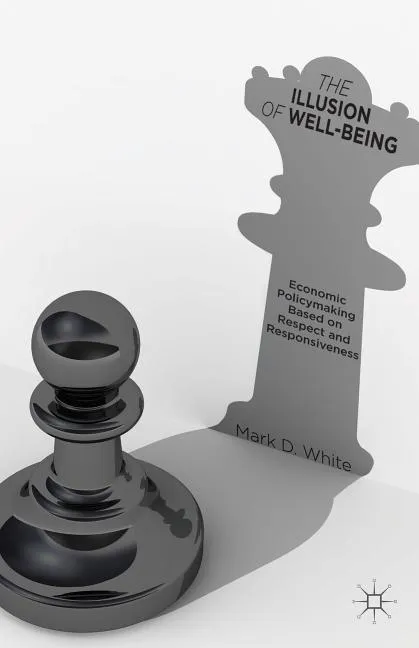
The use of measures of economic output to guide policymaking has been criticized for decades because of their weak ties to human well-being. Recently, many scholars and politicians have called for measures of happiness or subjective well-being to be used to guide policy in people's true interests. In The Illusion of Well-Being, Mark D. White explains why using happiness as a tool for policymaking is misguided and unethical. Happiness is too vague a term to define, and too general a concept, to measure in a way that captures people's true feelings. He extends this critique to well-being in general and concludes that no measure of well-being can do justice to people's true interests, which are complex, multifaceted, and subjective. White suggests instead that policymaking be conducted according to respect and responsiveness, promoting the true interests of citizens while addressing their real needs, and devoting government resources to where they can do the most good.
Mark D White
Mark D. White is a professor of philosophy at the College of Staten Island/CUNY who has written widely on superheroes and philosophy, including in the books Batman and Ethics and the A Philosopher Reads . . . series, as well as contributions to many volumes in the Blackwell Philosophy and Pop Culture series.
More by Mark D White








Why Readwise Books?
Readwise Books is an ebook & audiobook platform that automatically logs how much you and your friends read, making it fun and easy to read more. Learn more →