Report an issue
Tell us what's wrong and we'll take a look.
Thanks – we got it. We'll review and follow up if needed.
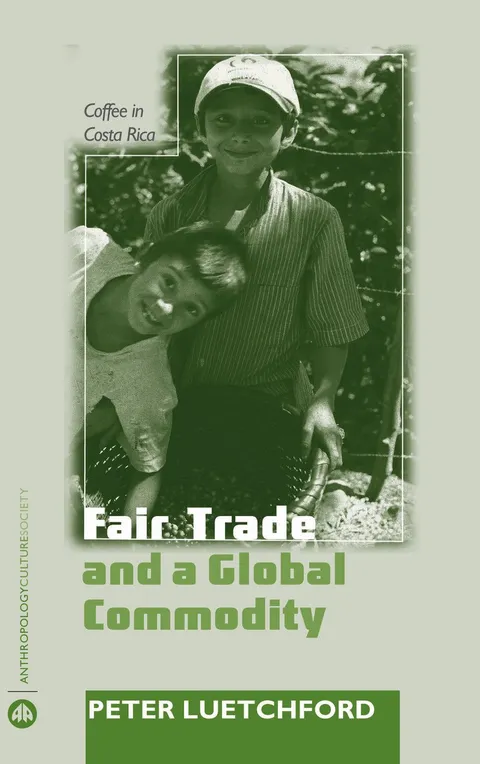
Fair trade is widely regarded as a universal good. This fascinating anthropological study takes a closer look at a coffee-growing community and cooperatives in Costa Rica - and subjects the fair trade movement to critical scrutiny.
As with conventional coffee, Western demand for organic fair trade produce is largely met by more affluent individuals with larger landholdings. As a result, it is caught up in the conflicts of interest and resentments that are part of the coffee industry as a whole. Ultimately fair trade fails to escape divisions that characterise other forms of production and consumption.
All growers are united in their criticism of the high margins accumulated by regional and transnational processors and exporters. Sustainability, just rewards and social cohesion have formed part of the world view of these agricultural communities for decades. This book shows how there is much common ground between the worlds of the commodity grower and the priorities of the fair trade movement - if not necessarily always in the ways we might suppose.
Peter G Luetchford
Peter G. Luetchford is Senior Lecturer in Anthropology at the University of Sussex and has carried out field research in Costa Rica and Spain. He has published on ethics and the economy, including Fair Trade and a Global Commodity: Coffee in Costa Rica (Pluto Press, 2008) and he is co-editor of Hidden Hands in the Market: Ethnographies of Fair Trade, Ethical Consumption and Corporate Social Responsibility (Research in Economic Anthropology 2008).
More by Peter G Luetchford


Why Readwise Books?
Readwise Books is an ebook & audiobook platform that automatically logs how much you and your friends read, making it fun and easy to read more. Learn more →