
Report an issue
Tell us what's wrong and we'll take a look.
Thanks – we got it. We'll review and follow up if needed.
According to Freud's later works, we do not really feel well or free within civilization. Our discontent never disappears, and we shall never become completely reliable members of society. Alcohol already suffices, Freud tells us, to ruin the fragile architecture of sublimations. Since 'Beyond the Pleasure Principle,' sublimation seems to be nothing more than a euphemism for suppressing the drives. We sublimate because we did not get or were not allowed to have what we 'actually' wanted. Is sublimation a mere surrogate or perhaps even the name psychoanalysis found for 'theoria' in the twentieth century? With Freud as its pivot, Goebel provides an intellectual history of sublimation, which also serves as an introduction to other key ideas associated with the authors discussed, such as Schopenhauer's philosophy of music, the will to power in Nietzsche, the structure of Freudian psychoanalysis, Adorno's concept of modern art, or Lacanian ethics. In examining both its prehistory and reception, Goebel argues that sublimation can be reconsidered as the road toward an individual and social life beyond discontent.
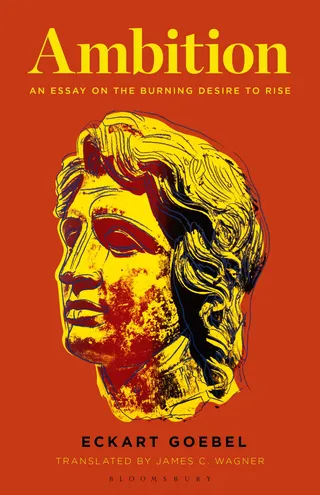
James C. Wagner
Translated by
James C. Wagner, Ph.D., is a lecturer in the Department of German at New York University, USA.


Why Readwise Books?
Readwise Books is an ebook & audiobook platform that automatically logs how much you and your friends read, making it fun and easy to read more. Learn more →