Invariant Measurement
Using Rasch Models in the Social, Behavioral, and Health Sciences
Report an issue
Tell us what's wrong and we'll take a look.
Thanks – we got it. We'll review and follow up if needed.
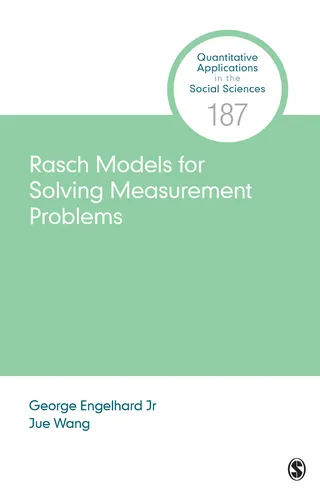
This is the second edition of an introductory text that describes the principles of invariant measurement; how invariant measurement can be achieved using Rasch measurement theory; and how to use invariant measurement to solve a variety of measurement problems in the social, behavioral, and health sciences.

Jue Wang
Jue Wang, Ph.D. is an assistant professor in Research, Measurement & Evaluation Program at The University of Miami. Dr. Wang received her Ph.D. in Quantitative Methodology (QM) Program under Educational Psychology at The University of Georgia (UGA) in 2018. She also obtained a M.S. degree in Statistics at UGA. While at UGA, Dr. Wang was awarded the Owen Scott Doctoral Research Scholarship in 2016 recognizing the contribution of her research work on evaluating rater accuracy and perception using Rasch measurement theory. Furthermore, she received the QM Outstanding Student Award in 2018 recognizing her accomplishments in research, teaching, and service during graduate school. Her research focuses on examining rating quality and exploring rater perception in rater-mediated assessments using measurement models, such as a family of Rasch models, unfolding models, and multilevel item response models. She has published in major journals related to measurement including Educational and Psychological Measurement, Journal of Educational Measurement, Assessing Writing, and Psychological Test and Assessment Modeling.
More by Jue Wang



Why Readwise Books?
Readwise Books is an ebook & audiobook platform that automatically logs how much you and your friends read, making it fun and easy to read more. Learn more →