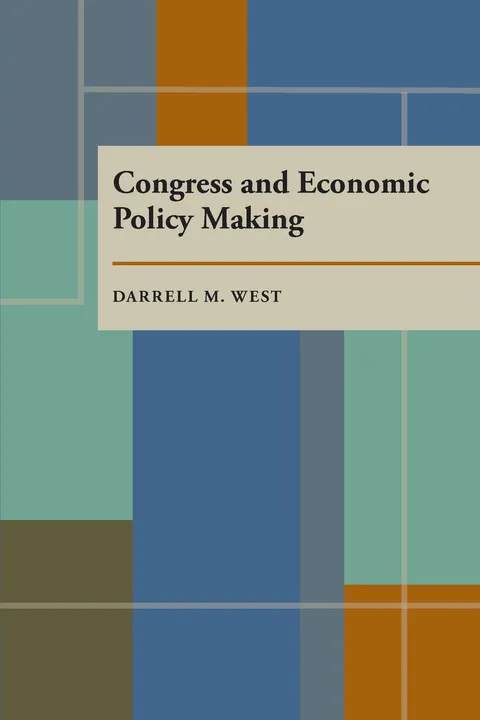
Congress and Economic Policy Making
Report an issue
Tell us what's wrong and we'll take a look.
Thanks – we got it. We'll review and follow up if needed.
Economic policymaking has perpetually been one of the central dilemmas facing Congress, leading to huge budget deficits and disagreements among legislators about spending priorities and tax policies.This book examines congressional decision making on economic policy during the Reagan administration. It looks at legislative actions on Reaganomics, tax reform, and the politics of deficit reduction, and shows the importance of looking not just at the consequences of these decisions but also at the legislative processes that led to them.
Using an "activist-based" approach and previously unexamined data, Darrell West shows that district activists, often more conservative than the public at large, exerted a disproportionate and misleading effect on congressional voting. When this support eventually proved unstable, a more skeptical Congress began to eventually back away from the president's policies. This move had serious consequences for deficit reduction and policy initiation, and also influenced the final shape of the tax reform package adopted in 1986.
Darrell M West
Darrell M. West is the Vice President of Governance Studies and Director of the Center for Technology Innovation at the Brookings Institution in Washington, D.C. He is the author of 22 books, including Megachange: Economic Disruption, Political Upheaval, and Social Strife in the 21st Century and Billionaires: Reflections on the Upper Crust.
More by Darrell M West



Why Readwise Books?
Readwise Books is an ebook & audiobook platform that automatically logs how much you and your friends read, making it fun and easy to read more. Learn more →