
The Gilded Age
Report an issue
Tell us what's wrong and we'll take a look.
Thanks – we got it. We'll review and follow up if needed.


First published in 1873, The Gilded Age is both a biting satire and a revealing portrait of post-Civil War America-an age of corruption when crooked land speculators, ruthless bankers, and dishonest politicians voraciously took advantage of the nation's peacetime optimism. With his characteristic wit and perception, Mark Twain and his collaborator, Charles Dudley Warner, attack the greed, lust, and naivete of their own time in a work which endures as a valuable social document and one of America's most important satirical novels.
Mark Twain
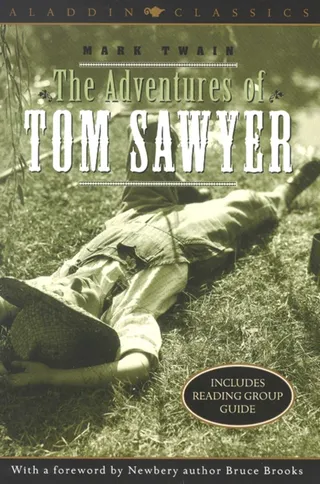
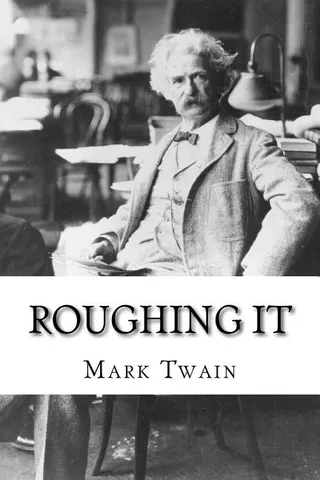
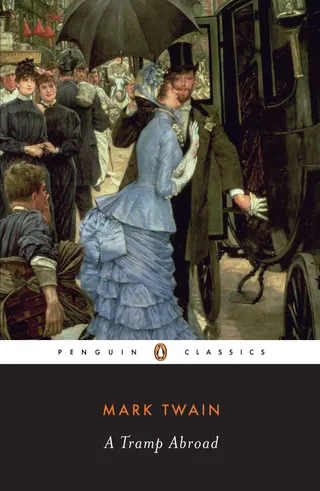
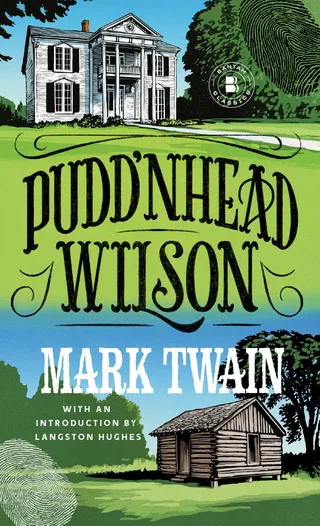
Mark Twain is the pseudonym of American writer and humorist Samuel Langhorne Clemens (1835-1910), whose best work is characterized by broad, often irreverent humor or biting social satire. Twain's writing is also known for realism of place and language, memorable characters, and hatred of hypocrisy and oppression. Born in Florida, Missouri, Clemens moved with his family to Hannibal, Missouri, a port on the Mississippi River, when he was four years old. There he received a public school education. After the death of his father in 1847, Clemens was apprenticed to two Hannibal printers, and in 1851 he began setting type for and contributing sketches to his brother Orion's Hannibal Journal. Subsequently he worked as a printer in Keokuk, Iowa; New York City; Philadelphia, Pennsylvania; and other cities. Later, Clemens was a steamboat pilot on the Mississippi River until the American Civil War brought an end to travel on the river. In 1862 he became a reporter on the Territorial Enterprise in Virginia City, Nevada, and in 1863 he began signing his articles with the pseudonym Mark Twain, a Mississippi River phrase meaning "two fathoms deep." In 1867 Twain lectured in New York City, and in the same year he visited Europe and Palestine. He wrote of these travels in The Innocents Abroad, a book exaggerating those aspects of European culture that impress American tourists. Much of Twain's best work was written in the 1870s and 1880s, when he was living in Hartford, Connecticut, or during the summers at Quarry Farm, near Elmira, New York. Roughing It recounts his early adventures as a miner and journalist; The Adventures of Tom Sawyer celebrates boyhood in a town on the Mississippi River; A Tramp Abroad describes a walking trip through the Black Forest of Germany and the Swiss Alps; Life on the Mississippi combines an autobiographical account of his experiences as a river pilot with a visit to the Mississippi nearly two decades after he left it; and A Connecticut Yankee in King Arthur's Court satirizes oppression in feudal England. The Adventures of Huckleberry Finn, the sequel to Tom Sawyer, is considered Twain's masterpiece. Twain's work during the 1890s and the 1900s is marked by growing pessimism and bitterness. Significant works of this period are Pudd'nhead Wilson, a novel set in the South before the Civil War that criticizes racism by focusing on mistaken racial identities, and Personal Recollections of Joan of Arc, a sentimental biography. In Twain's later years he wrote less, but he became a celebrity, frequently speaking out on public issues. He also came to be known for the white linen suit he always wore when making public appearances. Twain received an honorary doctorate from the University of Oxford in 1907. When he died he left an uncompleted autobiography, which was eventually edited by his secretary, Albert Bigelow Paine, and published in 1924.
More by Mark Twain



Charles Dudley Warner
Charles Dudley Warner was an American essayist, novelist, and prominent figure in 19th-century American literature. Born in Plainfield, Massachusetts, in 1829, he was known for his keen insights into American society and his satirical style. Warner's friendship with Mark Twain led to the collaboration on The Gilded Age: A Tale of Today, a novel that critiqued the corruption and excess of post-Civil War America, particularly its political and economic systems. Warner's literary contributions extended beyond novels, including essays, articles, and compilations, with works like Library of the World's Best Literature showcasing his broader literary expertise. Throughout his career, he focused on societal issues, using wit and humor to address them. Warner's writing resonated with readers for its accessibility and sharp commentary on the issues of his time. He passed away in 1900 at the age of 71 in Hartford, Connecticut, leaving behind a legacy as a significant voice in American literature and a keen observer of the complexities of American life. His work continues to be valued for its insightful social critiques and the literary friendships that shaped it. Warner's influence remains evident in the ongoing study of American realism and its exploration of cultural and political life.
More by Charles Dudley Warner











Why Readwise Books?
Readwise Books is an ebook & audiobook platform that automatically logs how much you and your friends read, making it fun and easy to read more. Learn more →