Report an issue
Tell us what's wrong and we'll take a look.
Thanks – we got it. We'll review and follow up if needed.
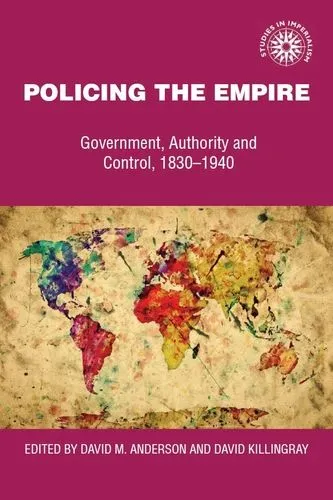
From the Victorian period to the present, images of the policeman have played a prominent role in the literature of empire, shaping popular perceptions of colonial policing. This book covers and compares the different ways and means that were employed in policing policies from 1830 to 1940. Countries covered range from Ireland, Australia, Africa and India to New Zealand and the Caribbean. As patterns of authority, of accountability and of consent, control and coercion evolved in each colony the general trend was towards a greater concentration of police time upon crime. The most important aspect of imperial linkage in colonial policing was the movement of personnel from one colony to another. To evaluate the precise role of the 'Irish model' in colonial police forces is at present probably beyond the powers of any one scholar. Policing in Queensland played a vital role in the construction of the colonial social order. In 1886 the constabulary was split by legislation into the New Zealand Police Force and the standing army or Permanent Militia. The nature of the British influence in the Klondike gold rush may be seen both in the policy of the government and in the actions of the men sent to enforce it. The book also overviews the role of policing in guarding the Gold Coast, police support in 1954 Sudan, Orange River Colony, Colonial Mombasa and Kenya, as well as and nineteenth-century rural India.


Why Readwise Books?
Readwise Books is an ebook & audiobook platform that automatically logs how much you and your friends read, making it fun and easy to read more. Learn more →