
The Wound Dresser
Report an issue
Tell us what's wrong and we'll take a look.
Thanks – we got it. We'll review and follow up if needed.

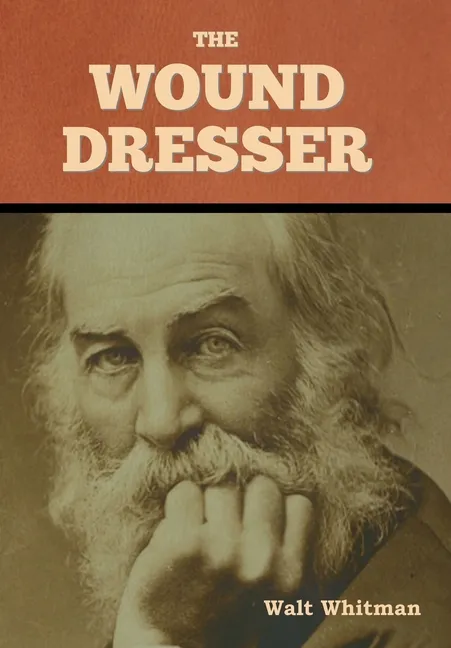
The Wound-Dresser is one of Walt Whitman's most popular poem, published in 1865 in his collection Drum Taps. It is a personal, graphic, and absolutely moving poem that centres on the theme of nursing the sick and dying and gives a realistic view of war and the unexciting side of what happens to the men who go to the fight it. This poem is extraordinary for its lack of extreme portrayals of pain and suffering. The poem features Whitman's experiences during the Civil War as a volunteer in Washington's hospitals. The Wound Dresser is then, a poem of the Civil War, a poem of our country's history, a poem of the poet's 'specimen interior', a poem based in Washington D.C., and a poem that reviews 'the narrow of the tragedy' that is war. It is a poem of remembering, of memory, of memory reviewed through dream. This is a remarkable collection of articles and letters about Walt Whitman's skills volunteering as a nurse in the Civil War. In the book, there is three articles. The articles tell about his time in the Civil War and many of his experiences with injured soldiers he met.
Walt Whitman
Walt Whitman (1819-1892), arguably one of America's most influential and innovative poets, was born into a working-class family in West Hills, New York, and grew up in Brooklyn. His Leaves of Grass, from which "When I Heard the Learn'd Astronomer" comes, is considered one of the central volumes in the history of world poetry. While most other major writers of his time enjoyed a highly structured, classical education at private institutions, Whitman forged his own rough and informal curriculum, and his brief stint at teaching suggests that Whitman employed what were then progressive techniques -- encouraging students to think aloud rather than simply recite, and involving his students in educational games.
More by Walt Whitman








Why Readwise Books?
Readwise Books is an ebook & audiobook platform that automatically logs how much you and your friends read, making it fun and easy to read more. Learn more →