Report an issue
Tell us what's wrong and we'll take a look.
Thanks – we got it. We'll review and follow up if needed.
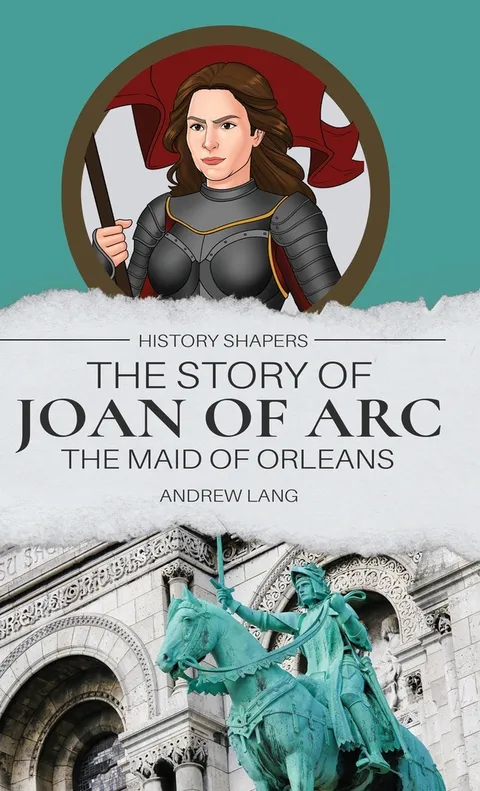
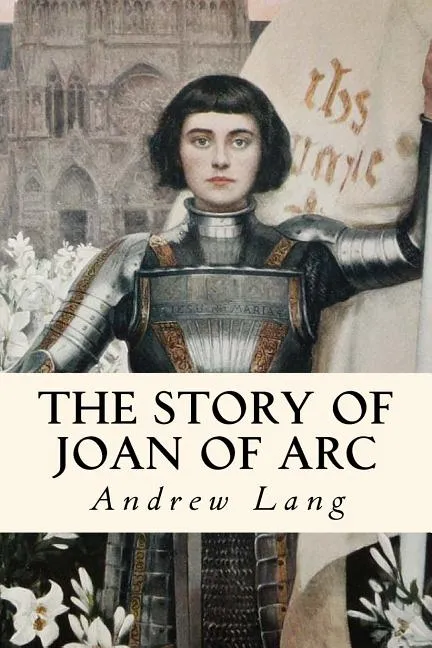
An illustrated copy of The Story of Joan of Arc.
The Story of Joan of Arc is the 1906 telling of the famous story of Joan of Arc by the author and historian, Andrew Lang.
Joan of Arc, "The Maid of Orléans," is considered a heroine of France for her role during the Lancastrian phase of the Hundred Years' War and was canonized as a Roman Catholic saint. Joan of Arc was born to Jacques d'Arc and Isabelle Romée, a peasant family, at Domrémy in north-east France. Joan said she received visions of the Archangel Michael, Saint Margaret, and Saint Catherine of Alexandria instructing her to support Charles VII and recover France from English domination late in the Hundred Years' War. The uncrowned King Charles VII sent Joan to the siege of Orléans as part of a relief mission. She gained prominence after the siege was lifted only nine days later. Several additional swift victories led to Charles VII's coronation at Reims. This long-awaited event boosted French morale and paved the way for the final French victory.
Andrew Lang
Andrew Lang (March, 31, 1844 – July 20, 1912) was a Scottish writer and literary critic who is best known as a collector of folk and fairy tales. Lang’s academic interests extended beyond the literary and he was a noted contributor to the fields of anthropology, folklore, psychical research, history, and classic scholarship, as well as the inspiration for the University of St. Andrew’s Andrew Lang Lectures. A prolific author, Lang published more than 100 works during his career, including twelve fairy books, in which he compiled folk and fairy tales from around the world. Lang’s Lilac Fairy and Red Fairy books are credited with influencing J. R. R. Tolkien, who commented on the importance of fairy stories in the modern world in his 1939 Andrew Lang Lecture “On Fairy-Stories.”
More by Andrew Lang


Why Readwise Books?
Readwise Books is an ebook & audiobook platform that automatically logs how much you and your friends read, making it fun and easy to read more. Learn more →