Report an issue
Tell us what's wrong and we'll take a look.
Thanks – we got it. We'll review and follow up if needed.
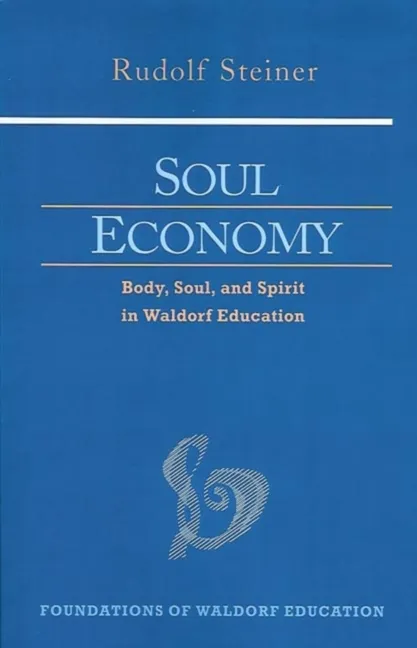
16 lectures, Dornach, Dec. 23, 1921-Jan. 5, 1922 (CW 303)
Today's schools fill children's heads with information instead of helping them develop their natural human faculties and capacities. They place too much stress on memory, leading to inner exhaustion instead of real learning for a healthy, fulfilling life.
The important lectures in this volume were given in Dornach, Switzerland, to leading educators, including many from England. As a result, he was invited to Oxford to expand on some ot the themes presented in these talks.
Steiner begins by placing Anthroposophy as the foundation for understanding the principles behind Waldorf education. In what follows, he describes an education based on the human as a continually developing being of body, soul, and spirit. From this perspective, Waldorf education depends on the teacher's ability to observe and respond to each stage of a child's development. Steiner shows how Waldorf education emphasizes the efficient use of children's inner energies and how children can be nurtured through their natural stages of development by giving them just what they need at the right time--an approach that Steiner calls "soul economy."
These detailed and accessible lectures give parents and teachers the keys to a much-needed renewal of education for our children and their future.
German source: Erziehung und Unterricht aus Menschenwesens. Eine Einführung in die anthroposophische Pädagogik und Didaktik. Weihnachtskurs für Lehrer (GA 303).
Rudolf Steiner
Rudolf Steiner (1861-1925) was born in the small village of Kraljevec, Austro-Hungarian Empire (now in Croatia), where he grew up. As a young man, he lived in Weimar and Berlin, where he became a well-published scientific, literary, and philosophical scholar, known especially for his work with Goethe's scientific writings. At the beginning of the twentieth century, he began to develop his early philosophical principles into an approach to systematic research into psychological and spiritual phenomena. Formally beginning his spiritual teaching career under the auspices of the Theosophical Society, Steiner came to use the term Anthroposophy (and spiritual science) for his philosophy, spiritual research, and findings. The influence of Steiner's multifaceted genius has led to innovative and holistic approaches in medicine, various therapies, philosophy, religious renewal, Waldorf education, education for special needs, threefold economics, biodynamic agriculture, Goethean science, architecture, and the arts of drama, speech, and eurythmy. In 1924, Rudolf Steiner founded the General Anthroposophical Society, which today has branches throughout the world. He died in Dornach, Switzerland.
More by Rudolf Steiner





Why Readwise Books?
Readwise Books is an ebook & audiobook platform that automatically logs how much you and your friends read, making it fun and easy to read more. Learn more →