Report an issue
Tell us what's wrong and we'll take a look.
Thanks – we got it. We'll review and follow up if needed.
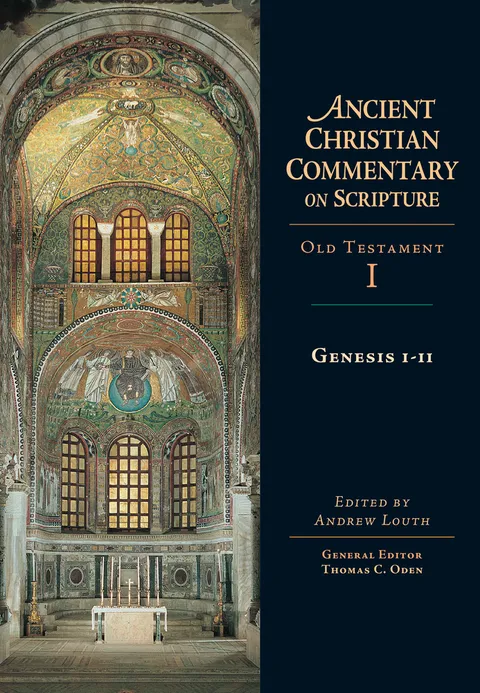
The rich tapestry of the creation narrative in the early chapters of Genesis proved irresistible to the thoughtful, reflective minds of the church fathers. Within them they found the beginning threads from which to weave a theology of creation, Fall, and redemption. Following their mentor the apostle Paul, they explored the profound significance of Adam as a type of Christ, the second Adam. The six days of creation proved especially attractive among the fathers as a subject for commentary, with Basil the Great and Ambrose producing well-known Hexaemerons. Similarly, Augustine devoted portions of five works to the first chapter of Genesis.
As in previous volumes within the Ancient Christian Commentary on Scripture, the range of comment contained in this volume spans from the first century to the eighth and from East to West, from Greek and Latin speakers to Syriac.
This ACCS volume on Genesis 1-11 opens up a treasure house of ancient wisdom that allows these faithful witnesses, some appearing here in English translation for the first time, to speak with eloquence and intellectual acumen to the church today. Especially helpful is the volume editor's provision of Septuagintal alternative readings to the Masoretic text, which are often necessary to understanding the fathers' flow of thought.
Andrew Louth
Andrew Louth is professor emeritus of patristic and Byzantine studies at Durham University, England, and visiting professor of Eastern Orthodox theology at the Amsterdam Centre of Eastern Orthodox Theology (ACEOT), in the Faculty of Theology, theFree University, Amsterdam.
Thomas C. Oden
Thomas C. Oden, the retired Henry Anson Buttz Professor of Theology and Ethics, is an ancient ecumenical evangelical with a passion for orthodoxy. For over thirty years he taught at Drew University and came under the influence of his “irascible, endearing Jewish mentor” Will Herberg. Herberg bluntly told Oden that he would remain “densely uneducated” unless he “read deeply in patristic writers.” This focus on patristics (the early church fathers) helped professor Oden to realize that modernity is over. As he probed the early church writers for several decades, he incorporated and rechanneled his activism and idealism for the modernist social gospel into a recovery of the classic religious tradition. Scripture found new life in him, which means he repented an enthrallment with progressive social causes in favor of a stable two-thousand year memory, which he defines as orthodoxy.


Why Readwise Books?
Readwise Books is an ebook & audiobook platform that automatically logs how much you and your friends read, making it fun and easy to read more. Learn more →