Report an issue
Tell us what's wrong and we'll take a look.
Thanks – we got it. We'll review and follow up if needed.
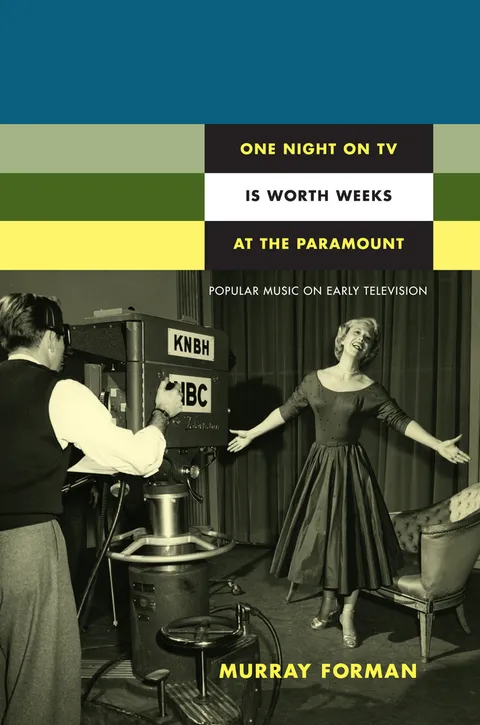
Elvis Presley's television debut in January 1956 is often cited as the moment when popular music and television came together. Murray Forman challenges that contention, revealing popular music as crucial to television years before Presley's sensational small-screen performances. Drawing on trade and popular journalism, internal television and music industry documents, and records of audience feedback, Forman provides a detailed history of the incorporation of musical performances into TV programming during the medium's formative years, from 1948 to 1955. He examines how executives in the music and television industries understood and responded to the convergence of the two media; how celebrity musicians such as Vaughn Monroe, Frank Sinatra, and Fred Waring struggled to adjust to television; and how relative unknowns with an intuitive feel for the medium were sometimes catapulted to stardom. Forman argues that early television production influenced the aesthetics of musical performance in the 1940s and 1950s, particularly those of emerging musical styles such as rock and roll. At the same time, popular music helped to shape the nascent medium of television--its technologies, program formats, and industry structures. Popular music performances were essential to the allure and success of TV in its early years.
Murray Forman
Murray Forman is Professor Emeritus of Media and Screen Studies at Northeastern University and is author of The ’Hood Comes First: Race, Space, and Place in Rap and Hip-Hop.
More by Murray Forman





Why Readwise Books?
Readwise Books is an ebook & audiobook platform that automatically logs how much you and your friends read, making it fun and easy to read more. Learn more →