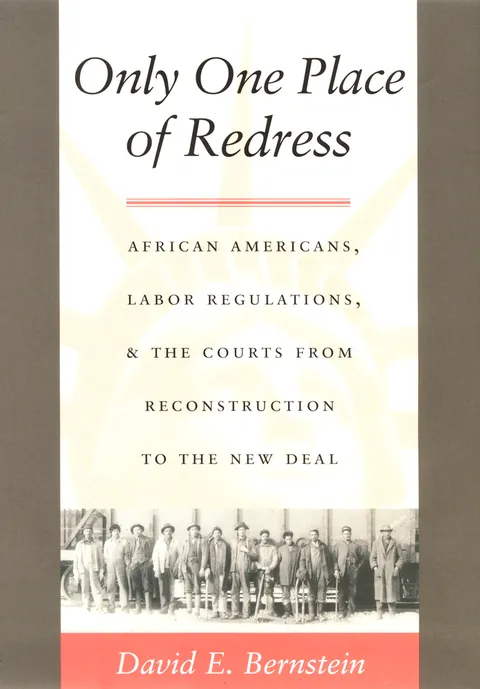
Only One Place of Redress
African Americans, Labor Regulations, and the Courts from Reconstruction to the New Deal
Report an issue
Tell us what's wrong and we'll take a look.
Thanks – we got it. We'll review and follow up if needed.
A pioneer in applying the insights of public choice theory to legal history, Bernstein contends that the much-maligned jurisprudence of the Lochner era--with its emphasis on freedom of contract and private market ordering--actually discouraged discrimination and assisted groups with little political clout. To support this thesis he examines the motivation behind and practical impact of laws restricting interstate labor recruitment, occupational licensing laws, railroad labor laws, minimum wage statutes, the Davis-Bacon Act, and New Deal collective bargaining. He concludes that the ultimate failure of Lochnerism--and the triumph of the regulatory state--not only strengthened racially exclusive labor unions but contributed to a massive loss of employment opportunities for African Americans, the effects of which continue to this day.
Scholars and students interested in race relations, labor law, and legal or constitutional history will be fascinated by Bernstein's daring--and controversial--argument.
David E Bernstein
David E. Bernstein is Foundation Professor at the George Mason University School of Law and the author of several books, including, most recently, You Can't Say That! The Growing Threat to Civil Liberties from Antidiscrimination Laws.
More by David E Bernstein


Why Readwise Books?
Readwise Books is an ebook & audiobook platform that automatically logs how much you and your friends read, making it fun and easy to read more. Learn more →