Report an issue
Tell us what's wrong and we'll take a look.
Thanks – we got it. We'll review and follow up if needed.
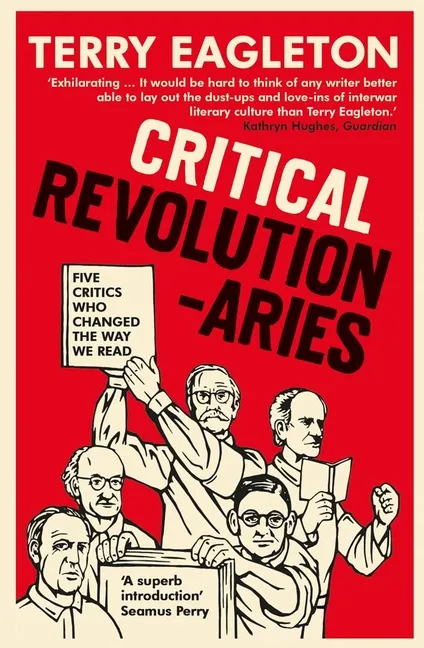
Before the First World War, traditional literary scholarship was isolated from society at large. In the years following, a younger generation of critics came to the fore. Their work represented a reaction to the impoverishment of language in a commercial, utilitarian society increasingly under the sway of film, advertising, and the popular press. For them, literary criticism was a way of diagnosing social ills and had a vital moral function to perform.
Terry Eagleton reflects on the lives and work of T. S. Eliot, I. A. Richards, William Empson, F. R. Leavis, and Raymond Williams, and explores a vital tradition of literary criticism that today is in danger of being neglected. These five critics rank among the most original and influential of modern times and represent one of the most remarkable intellectual formations in twentieth-century Britain. This was the heyday of literary modernism, a period of change and experimentation--the bravura of which spurred on developments in critical theory.
Terry Eagleton
Terry Eagleton is Professor of Cultural Theory and John Rylands Fellow, University of Manchester. His other books include Ideology; The Function of Criticism; Heathcliff and the Great Hunger; Against the Grain; Walter Benjamin; and Criticism and Ideology, all from Verso.
More by Terry Eagleton


Why Readwise Books?
Readwise Books is an ebook & audiobook platform that automatically logs how much you and your friends read, making it fun and easy to read more. Learn more →