Report an issue
Tell us what's wrong and we'll take a look.
Thanks – we got it. We'll review and follow up if needed.
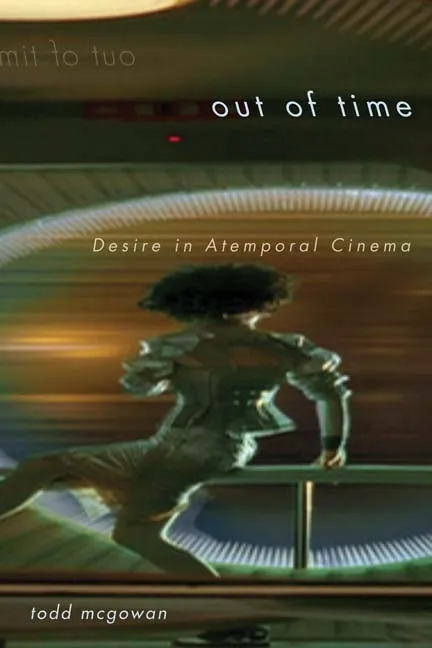
In Out of Time, Todd McGowan takes as his starting point the emergence of a temporal aesthetic in cinema that arose in response to the digital era. Linking developments in cinema to current debates within philosophy, McGowan claims that films that change the viewer's relation to time constitute a new cinematic mode: atemporal cinema.
In atemporal cinema, formal distortions of time introduce spectators to an alternative way of experiencing existence in time--or, more exactly, a way of experiencing existence out of time. McGowan draws on contemporary psychoanalysis, particularly Jacques Lacan, to argue that atemporal cinema unfolds according to the logic of the psychoanalytic notion of the drive rather than that of desire, which has conventionally been the guiding concept of psychoanalytic film studies.
Despite their thematic diversity, these films distort chronological time with a shared motivation: to reveal the logic of repetition. Like psychoanalysis, McGowan contends, the atemporal mode locates enjoyment in the embrace of repetition rather than in the search for the new and different.
Todd McGowan
Todd McGowan teaches at the University of Vermont and is the author of Emancipation After Hegel: Achieving a Contradictory Revolution, among other books.
More by Todd McGowan




Why Readwise Books?
Readwise Books is an ebook & audiobook platform that automatically logs how much you and your friends read, making it fun and easy to read more. Learn more →