Report an issue
Tell us what's wrong and we'll take a look.
Thanks – we got it. We'll review and follow up if needed.
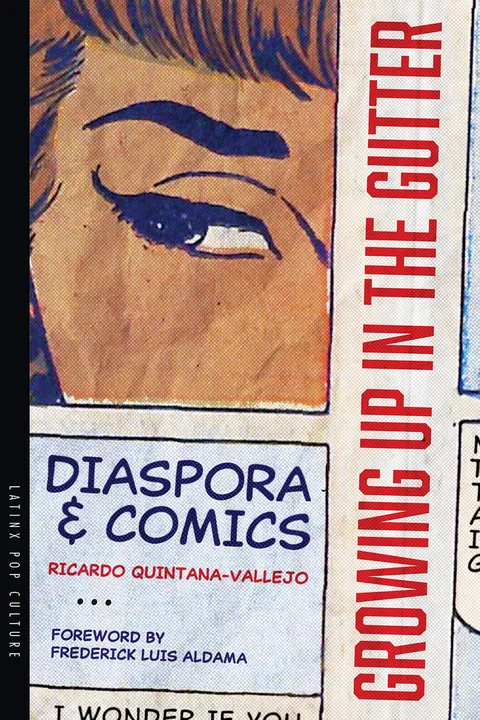
While the most traditional iteration of the bildungsroman--the coming-of-age story--follows middle-class male heroes who forge their identities in a process of complex introspection, contemporary graphic coming-of-age narratives represent formative processes that fit into, resist, or even disregard narratives of socialization under capitalism, of citizenship, and of nationhood.
Quintana-Vallejo delves into several important themes: how the coming-of-age genre can be used to study adulthood, how displacement and international or global heritage are fundamental experiences, how multidiasporic approaches foreground lived experiences, and how queerness opens narratives of development to the study of adulthood as fundamentally diverse and nonconforming to social norms. Quintana-Vallejo shows how openness enables belonging among chosen families and, perhaps most importantly, freedom to disidentify. And, finally, how contemporary authors writing for the instruction of BIPOC children (and children otherwise affected by diaspora and displacement) use the didactic power of the coming-of-age genre, combined with the hybrid language of graphic narratives, to teach difficult topics in accessible ways.
Ricardo Quintana-Vallejo
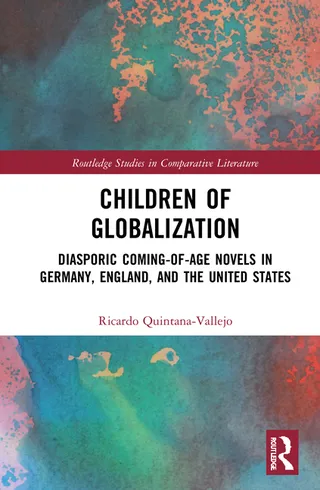
Ricardo Quintana-Vallejo is assistant professor of English at Rhode Island College. He is the author of Children of Globalization: Diasporic Coming-of-Age Novels in Germany, England, and the United States. He has been a Lynn and Fulbright fellow.
More by Ricardo Quintana-Vallejo



Why Readwise Books?
Readwise Books is an ebook & audiobook platform that automatically logs how much you and your friends read, making it fun and easy to read more. Learn more →