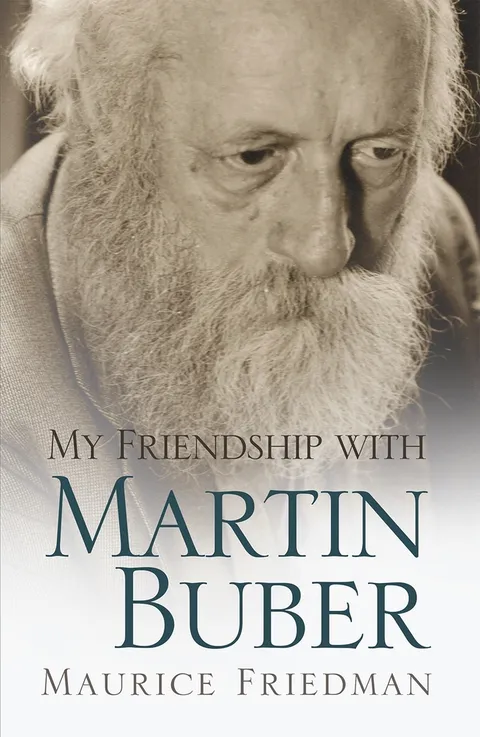
My Friendship with Martin Buber
Report an issue
Tell us what's wrong and we'll take a look.
Thanks – we got it. We'll review and follow up if needed.
Martin Buber's philosophy of dialogue sought to express the human experience through the ways in which we encounter and interact with others. His "I--Thou" theory of dialogue and "I--It" theory of monologue expressed ways of understanding one's place in the world in relation to others, objects, and especially God. Buber died in 1965, leaving behind a vast library of writings and ardent students and scholars eager to engage with his ideas. One of the most prominent scholars was Maurice Friedman. Friedman and Buber shared a professional as well as a personal relationship, based on translating, interpreting, and intellectual curiosity. Beginning in the summer of 1950 and ending with Buber's death, this volume takes the reader through Buber's three visits to America, his wife's death, the author's stay in Jerusalem, and the articulation of Buber's culminating philosophy of the interhuman. In tracing this chronology, Friedman draws extensively on his personal collection of letters exchanged with Buber. Intimate and meditative, this book provides an exploration of a deeply intellectual friendship shared between two extraordinary thinkers.
Maurice Friedman
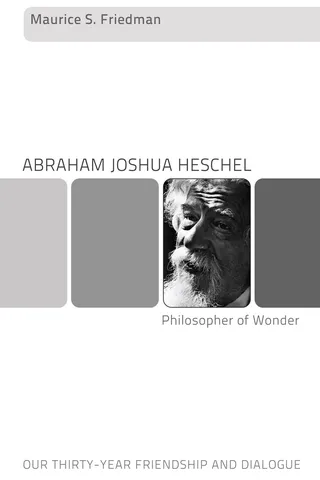
Maurice S. Friedman was Professor Emeritus of Religion, Philosophy, and Comparative Literature at San Diego State University. He is the author or editor of over fifty books, including a translation of Martin Buber's Hasidism and Modern Man (2005) and Abraham Joshua Heschel & Elie Wiesel, You Are My Witnesses (1987).
More by Maurice Friedman




Why Readwise Books?
Readwise Books is an ebook & audiobook platform that automatically logs how much you and your friends read, making it fun and easy to read more. Learn more →