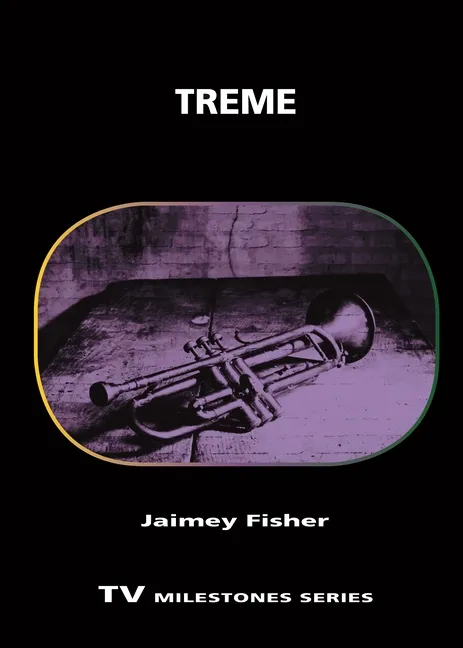
Treme
Report an issue
Tell us what's wrong and we'll take a look.
Thanks – we got it. We'll review and follow up if needed.
Explores the urban context of post-Katrina New Orleans with which the TV show engages.
In Treme, Jaimey Fisher analyzes how the HBO television series Treme (2010-13) treads new ground by engaging with historical events and their traumatic aftermaths, in particular with Hurricane Katrina in 2005 and subsequent flooding in New Orleans. Instead of building up to a devastating occurrence, David Simon's much anticipated follow-up to The Wire (2002-08) unfolds with characters coping in the wake of catastrophe, in a mode that Fisher explores as "afterness." Treme charts these changes while also memorializing the number of New Orleans cultures that were immediately endangered.
David Simon's and Eric Overmyer's Treme attempts something unprecedented for a multi-season series. Although the show follows, in some ways, in the celebrated footsteps of The Wire--for example, in its elegiac tracking of the historical struggles of an American city--Fisher investigates how Treme varies from The Wire's work with genre and what replaces it: The Wire is a careful, even baroque variation on the police drama, while Treme dispenses with genre altogether. This poses considerable challenges for popular television, which Simon and Overmyer address in several ways, including by offering a carefully montaged map of New Orleans and foregrounding the distance witnessing of watershed events there. Another way in which Treme sets itself apart is its memorialization of the city's inestimable contributions to American music, especially to jazz, soul, rhythm and blues, rap, rock, and funk. Treme gives such music and its many makers unprecedented attention, both in terms of screen time for music and narrative exposition around musicians. A key element of the volume is its look at the show's themes of race, crime, and civil rights as well as the corporate versus community recovery and remaking of the city.
Treme's synthesizing mélange of the arts in their specific geographical context, coupled with political and socio-economic analysis of the city, highlights the show's unique approach. Fans of the works of Simon and Overmyer, as well as television studies students and scholars, will enjoy this keen-eyed approach to a beloved show.
Jaimey Fisher
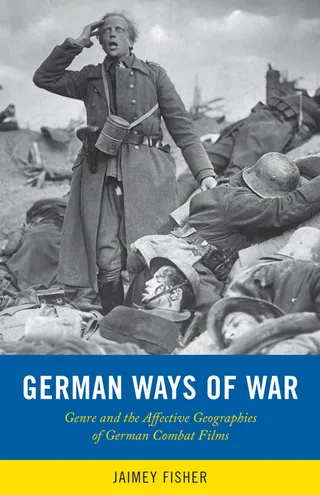
Jaimey Fisher is director of UCHRI, the University of California Humanities Research Institute in Irvine, California, as well as professor of German and of Cinema & Digital Media at the University of California, Davis. He is also professor of Humanities at UC Irvine, affiliated in Comparative Literature and Film & Media Studies. He is the author of four books (mostly recently of German Ways of War, on the history of German war films) and editor or co-editor of another nine volumes, on film studies and on critical theory.
More by Jaimey Fisher



Why Readwise Books?
Readwise Books is an ebook & audiobook platform that automatically logs how much you and your friends read, making it fun and easy to read more. Learn more →