Report an issue
Tell us what's wrong and we'll take a look.
Thanks – we got it. We'll review and follow up if needed.
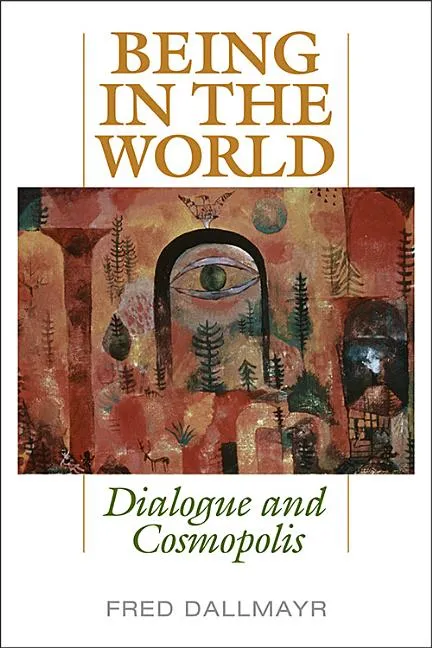
It is commonly agreed that we live in an age of globalization, but the profound consequences of this development are rarely understood. Usually, globalization is equated with the expansion of economic and financial markets and the proliferation of global networks of communication. In truth, much more is at stake: Traditional concepts of individual and national identity as well as perceived relationships between the self and others are undergoing profound change. Every town has become a potential cosmopolis—an international city—affecting the way that people conceptualize the relationship between public order and political practice.
In Being in the World, noted political theorist Fred Dallmayr explores the globe's transition from the traditional Westphalian system of states to today's interlocking cosmopolitan network. Drawing upon sacred scriptures as well as the work of ancient philosophers such as Plato and Aristotle and more recent scholars such as Martin Heidegger, Hans-Georg Gadamer, and Raimon Panikkar, this book delves into what Dallmayr calls "being in the world," seen as an aspect of ethical-political engagement. Rather than lamenting current problems, he suggests addressing them through civic education and cosmopolitan citizenship. Dallmayr advocates a politics of the common good, which requires the cultivation of public ethics, open dialogue, and civic responsibility.
Fred Dallmayr
Fred Dallmayr is Packey J. Dee Professor Emeritus of Philosophy and Political Science at the University of Notre Dame. His many books include The Promise of Democracy: Political Agency and Transformation, also published by SUNY Press.
More by Fred Dallmayr






Why Readwise Books?
Readwise Books is an ebook & audiobook platform that automatically logs how much you and your friends read, making it fun and easy to read more. Learn more →