Report an issue
Tell us what's wrong and we'll take a look.
Thanks – we got it. We'll review and follow up if needed.
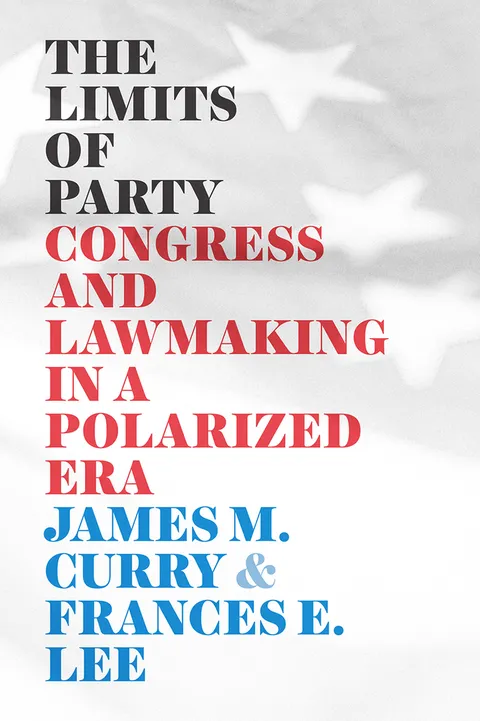
To many observers, Congress has become a deeply partisan institution where ideologically-distinct political parties do little more than engage in legislative trench warfare. A zero-sum, winner-take-all approach to congressional politics has replaced the bipartisan comity of past eras. If the parties cannot get everything they want in national policymaking, then they prefer gridlock and stalemate to compromise. Or, at least, that is the conventional wisdom. In The Limits of Party, James M. Curry and Frances E. Lee challenge this conventional wisdom. By constructing legislative histories of congressional majority parties' attempts to enact their policy agendas in every congress since the 1980s and by drawing on interviews with Washington insiders, the authors analyze the successes and failures of congressional parties to enact their legislative agendas. ? Their conclusions will surprise many congressional observers: Even in our time of intense party polarization, bipartisanship remains the key to legislative success on Capitol Hill. Congressional majority parties today are neither more nor less successful at enacting their partisan agendas. They are not more likely to ram though partisan laws or become mired in stalemate. Rather, the parties continue to build bipartisan coalitions for their legislative priorities and typically compromise on their original visions for legislation in order to achieve legislative success.
James M. Curry
James M. Curry is professor of political science at the University of Notre Dame. He is the author of Legislating in the Dark: Information and Power in the House of Representatives and coauthor of The Limits of Party: Congress and Lawmaking in a Polarized Era.
More by James M. Curry
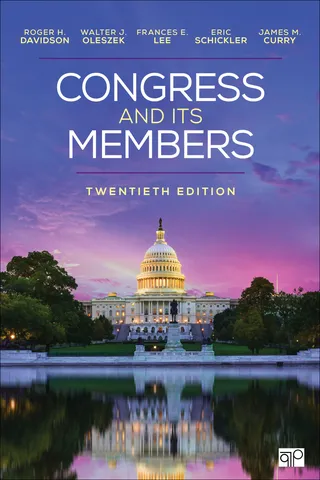

Frances E. Lee
Frances E. Lee is Professor of Government and Politics at the University of Maryland, College Park. She is author of Insecure Majorities: Congress and the Perpetual Campaign (2016), Beyond Ideology: Politics, Principles, and Partisanship in the US Senate (2009) and coauthor of Sizing Up The Senate: The Unequal Consequences of Equal Representation (1999). Her books have received national recognition, including the American Political Science Association's Richard F. Fenno Award and the D. B. Hardeman Award presented by the Lyndon Baines Johnson Foundation for the best book on a congressional topic.
More by Frances E. Lee


Why Readwise Books?
Readwise Books is an ebook & audiobook platform that automatically logs how much you and your friends read, making it fun and easy to read more. Learn more →