Report an issue
Tell us what's wrong and we'll take a look.
Thanks – we got it. We'll review and follow up if needed.
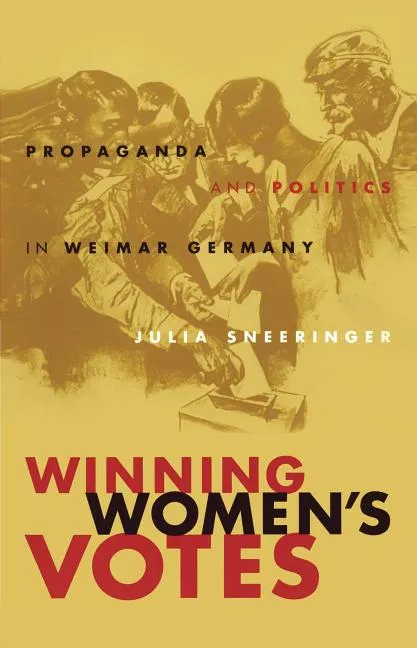
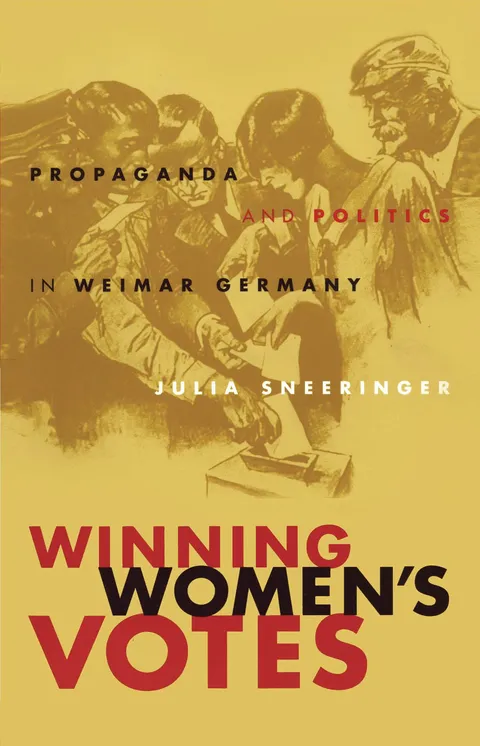
In November 1918, German women gained the right to vote, and female suffrage would forever change the landscape of German political life. Women now constituted the majority of voters, and political parties were forced to address them as political actors for the first time.
Analyzing written and visual propaganda aimed at, and frequently produced by, women across the political spectrum — including the Communists and Social Democrats; liberal, Catholic, and conservative parties; and the Nazis — Julia Sneeringer shows how various groups struggled to reconcile traditional assumptions about women’s interests with the changing face of the family and female economic activity. Through propaganda, political parties addressed themes such as motherhood, fashion, religion, and abortion. But as Sneeringer demonstrates, their efforts to win women’s votes by emphasizing “women’s issues” had only limited success.
The debates about women in propaganda were symptomatic of larger anxieties that gripped Germany during this era of unrest, Sneeringer says. Though Weimar political culture was ahead of its time in forcing even the enemies of women’s rights to concede a public role for women, this horizon of possibility narrowed sharply in the face of political instability, economic crises, and the growing specter of fascism.
Julia Sneeringer
Julia Sneeringer is Professor of History at Queens College and the Graduate Center, City University of New York, USA. She is the author of Winning Women's Votes: Propaganda and Politics in Weimar Germany (2002).
More by Julia Sneeringer


Why Readwise Books?
Readwise Books is an ebook & audiobook platform that automatically logs how much you and your friends read, making it fun and easy to read more. Learn more →