Report an issue
Tell us what's wrong and we'll take a look.
Thanks – we got it. We'll review and follow up if needed.
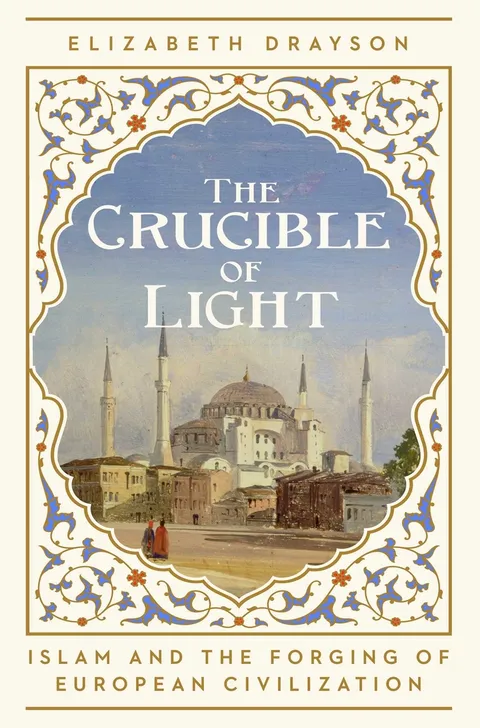
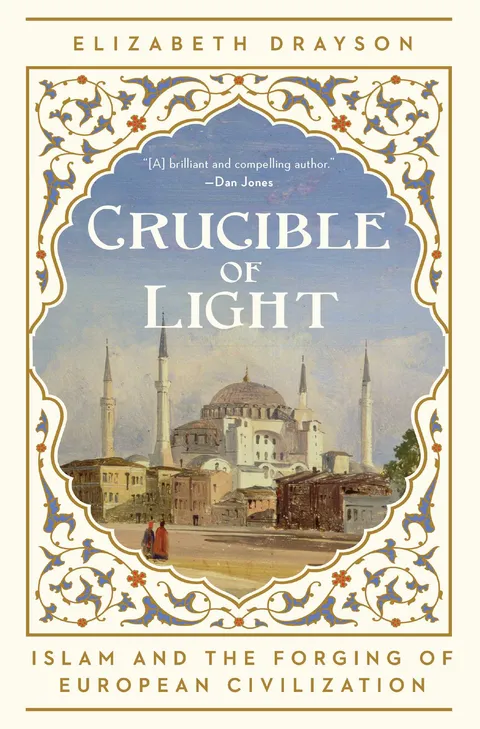
The epic history of Europe’s rich Islamic heritage, exploring the endless complexities of this centuries-long relationship.
Few readers are aware how much Europe owes to its Islamic heritage; this book aims to restore the central place of Muslim culture in the continent’s history, while exploring the endless complexities that this vexed relationship creates. At a time when Islam is so narrowly identified with terrorism and migration in Europe, Crucible of Light is a welcome and necessary corrective.
The contested but fruitful relationship between Islam and Europe begins in 711AD with the Moorish invasion of Spain and continues to the present. Crucible of Light tells the story of the conquest and reconquest of Spain over an epic 800 year period; the meteoric rise of Arabo-Norman Sicily; the Ottoman renaissance of the sixteenth to eighteenth centuries; and the ebb and flow of Balkan history and the fate of contested islands like Cyprus and Malta, with their very different outcomes.
This scale of history can only be done by focusing on individual stories and key places and, above all, by tracking themes. Winding through this story are, of course, epic battles and sieges, with Jihad and Crusade mirroring each other; but also periods of extraordinary collaboration and sharing: Europe owing its initial rediscovery of classical learning and science via the vast libraries in Spain, scoured for enlightenment by Muslim, Jewish and Christian scholars alike.
Moorish architecture and gardens and geometric design, not to mention the life of the harem, eventually feed into the insatiable appetite for Orientalism in the nineteenth century, which itself was the sequel to an earlier obsession for oriental goods in the sixteenth and seventeenth century courts. In between there are patterns of hidden faiths and swapped identities as people or buildings adapt or change sides.
The Hagia Sophia in Istanbul at one end of the Mediterranean and the Great Mosque in Cordoba, with its huge cathedral dropped into the middle of it, bookend the kinds of religious inversions we find in this epic story. Travel and exchange of people, ideas, and merchandise are an undercurrent throughout, (arriving inevitably in Venice in its golden age), cutting across opposite tides of rivalry, intolerance, and military confrontation.
Elizabeth Drayson
Elizabeth Drayson is Emeritus Fellow in Spanish at Murray Edwards College, University of Cambridge. She specializes in medieval and early modern Spanish literature and cultural history, and has a particular interest in the Arabic, Jewish, and Christian cultures of medieval and Golden Age Spain. Her books include The Moor’s Last Stand, which featured among The Times and the Sunday Times History Books of the Year 2017, and Lost Paradise: The Story of Granada. She was a central figure in an award-winning international research project charting the legacy of Islam in Europe from 1350 - 1550.
More by Elizabeth Drayson


Why Readwise Books?
Readwise Books is an ebook & audiobook platform that automatically logs how much you and your friends read, making it fun and easy to read more. Learn more →