Report an issue
Tell us what's wrong and we'll take a look.
Thanks – we got it. We'll review and follow up if needed.
Lynda L. Crist, Associate Editor
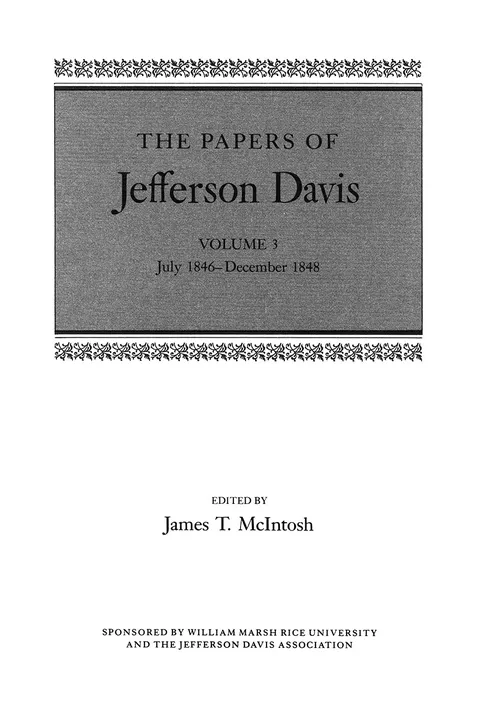
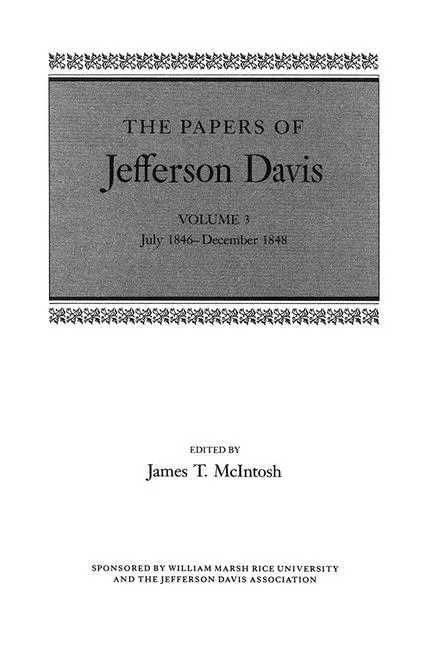
Mary S. Dix, Assistant EditorAt the end of Volume 2 Jefferson Davis had left Congress to become a colonel in the First Mississippi Regiment. The first item in this volume is a speech as he prepares to leave on a riverboat to serve in the Mexican War. The years 1846 through 1848 see Davis play a conspicuous role in the war and in the subsequent political clashes and controversies over slavery.Volume 3 details Davis' first experience in battle as an officer of a regiment as well as his initial term as a U.S. senator. He received both praise and criticism for his leadership in Mexico. In 1847 he returned to Mississippi a wounded hero of national fame, refused a brigadier generalship, and took his place in the U.S. Senate.There are several items of correspondence with Zachary Taylor that shed light on Taylor's attitude toward the proposed nomination that would lead to his election as president in 1848. Davis' first wife was Taylor's daughter; and in spite of political and family differences the two men maintained a close friendship. In a major speech in July, 1848, Davis protested the formal prohibition of slavery from the Oregon Territory; he then voted for the Senate's compromise bill on Oregon.Volume 3 of The Papers of Jefferson Davis includes letters to and from Davis, his speeches in chronological order, and other documents, further illuminating Davis' character, opinions, philosophy, and personal relationships as well as continuing the development of his military career.
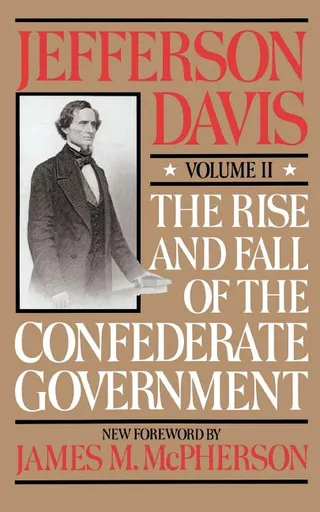
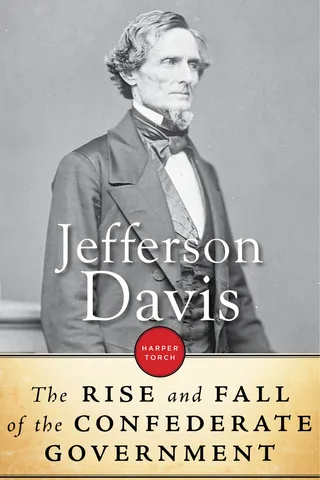
Jefferson Davis
Jefferson Davis was an American soldier and politician, but is best known for being the only president of the Confederate States of America. Educated as a soldier at the U.S. Military Academy at West Point, Davis served two tours of military service, first during the Black Hawk War in 1832 and later during the Mexican-American War from 1846-48. Following the Mexican-American War, Davis was appointed to the United States Senate, and later served as secretary of war to President Pierce. Although Davis, as a senator, had argued against secession, he resigned his role in the federal government and returned to his home state of Mississippi following that state’s successful succession vote, and was acclaimed president of the Confederate States of America in 1861.
At the end of the American Civil War in 1865, Davis was captured and accused of treason, and his citizenship was revoked. Davis’s 1881 memoir, The Rise and Fall of the Confederate Government did much to restore his reputation, as did his efforts to encourage reconciliation, however, his citizenship was not restored until 1978. Jefferson Davis died in 1889.
More by Jefferson Davis


Why Readwise Books?
Readwise Books is an ebook & audiobook platform that automatically logs how much you and your friends read, making it fun and easy to read more. Learn more →