Report an issue
Tell us what's wrong and we'll take a look.
Thanks – we got it. We'll review and follow up if needed.
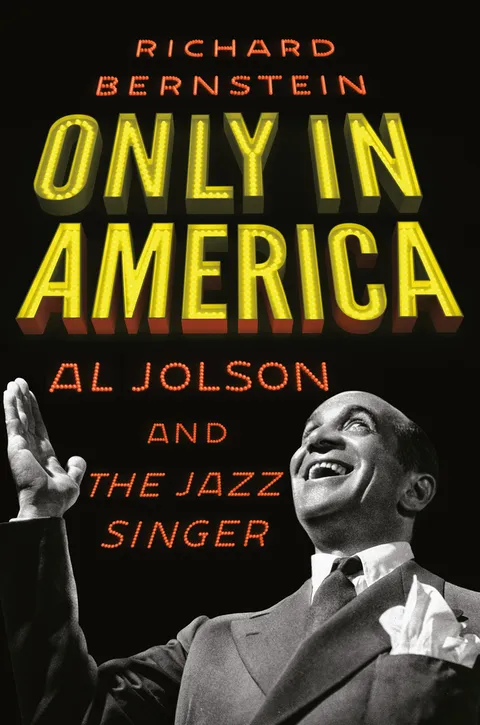
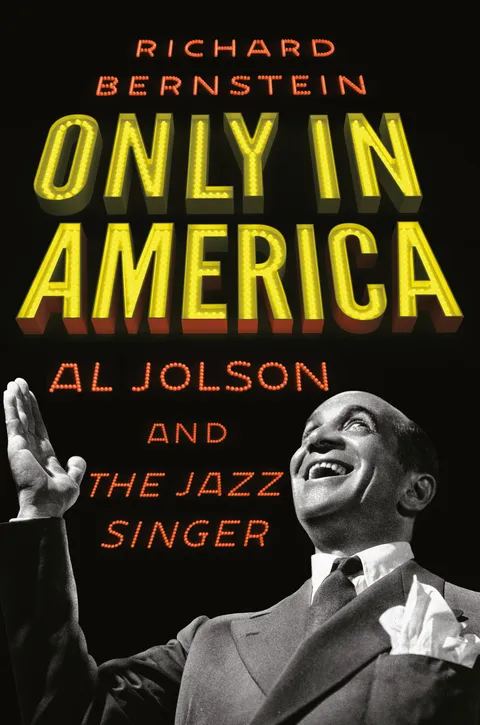
A probing biography of world-renowned Jewish singer and actor Al Jolson and the history of his performance in and the making of The Jazz Singer
Al Jolson, born Asa Yoelson, immigrated from a shtetl in Lithuania to the United States in 1894 after his father secured a job as a rabbi in Washington, D.C. A poor, Yiddish-speaking newcomer navigating a racially segregated and antisemitic America, young Jolson dreamed of becoming a star, and he did. Thanks to his immense talent and his knack for assimilating into new environments, by the time he reached his twenties he was the most famous and highly paid entertainer in America, making almost $5,000 a week at a time when the average American made $800 a year. Jolson’s public adoration and widespread acceptance as a star marked the beginning of an enriching cultural transformation, a moment when the American mind opened up to ethnic and racial differences, widening the gap of acceptability. And yet Jolson himself, despite being ferociously ambitious and gigantically talented, was crippled by insecurity, often nervous to the point of collapse, prisoner to his many vices.
Through Jolson, Bernstein simultaneously breaks open the history and legacy of the cultural sensation The Jazz Singer. Not only was The Jazz Singer the first feature length film with synchronized music and dialogue, but it was also taboo smashing in its content: The Jazz Singer is all about Jews, Orthodox and otherwise. Bernstein expounds on the making of The Jazz Singer, what the film meant then and now, introducing the many individuals involved in its production, including Samson Raphaelson, a young Jewish writer whose short story was the basis for the movie; the four Warner brothers, who made a fortune off it; and George Jessel, Jolson’s rival and the star of Raphaelson's stage adaptation of his short story. In the background emerges a picture of old Hollywood in the Roaring Twenties: cutthroat and greedy yet visionary and progressive. And while The Jazz Singer represented the future in many ways, it also dredged up the worst of the past, including Jolson’s use of blackface, common at the time.
At once a tale of the Judaizing of American culture and an acknowledgment of the challenges to come, Only in America is a glistening examination of a man at the center of a watershed moment in the arts.
Richard Bernstein
Richard Bernstein has been a prominent journalist and writer for forty years, first with Time magazine, then for a quarter of a century at The New York Times, and currently as a freelance writer and editor living in Brooklyn, NY. His foreign assignments for The Times included the posts of bureau chief at the United Nations, the Paris bureau, and Berlin. For six years, he was one of the paper's daily book critics.
More by Richard Bernstein











Why Readwise Books?
Readwise Books is an ebook & audiobook platform that automatically logs how much you and your friends read, making it fun and easy to read more. Learn more →