Report an issue
Tell us what's wrong and we'll take a look.
Thanks – we got it. We'll review and follow up if needed.
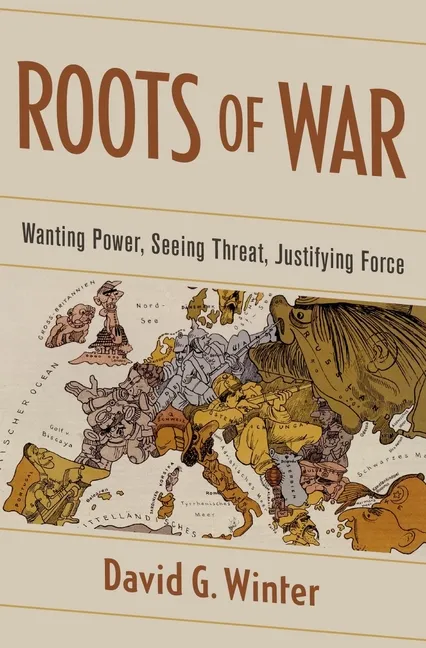
In July 1914, the long-standing peace of Europe was shattered when the Sarajevo assassinations quickly escalated to World War I. In contrast, at the height of the Cold War, the Cuban Missile Crisis could have easily plunged the world into a thermonuclear world war, but was ultimately peacefully resolved. Why the different outcomes?
In Roots of War: Wanting Power, Seeing Threat, Justifying Force, David G. Winter identifies three psychological factors that contributed to the differences in these historical outcomes: the desire for power, exaggerated perception of the opponent's threat, and justification for using military force. Several lines of research establish how these factors lead to escalation and war: comparative archival studies of "war" and "peace" crises, laboratory experiments on threat perception, and surveys of factors leading people to believe that a particular war is "just."
The research findings in Roots of War also demonstrate the importance of power in preserving peace through diplomatic interventions, past and present.


Why Readwise Books?
Readwise Books is an ebook & audiobook platform that automatically logs how much you and your friends read, making it fun and easy to read more. Learn more →