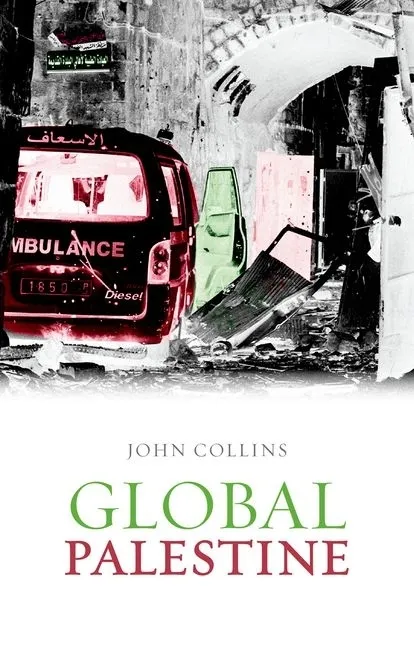
Global Palestine
Report an issue
Tell us what's wrong and we'll take a look.
Thanks – we got it. We'll review and follow up if needed.
Global Palestine offers a unique perspective on one of the world's most enduring political controversies by exploring a deceptively simple question: what does Palestine mean for the globe? The book begins from three overlapping premises. First, contemporary Palestine is the site of an ongoing project of settler colonisation. Second, as a growing movement of international solidarity indicates, Palestine's global importance seems to be increasing in inverse proportion to the amount of territory actually controlled by Palestinians. Third, understanding why and how Palestine matters globally requires situating the "local" struggle over Palestine in relation to a series of global processes that shape the conditions within which all of us live our lives, including the four processes that underpin this book: colonization, securitization, acceleration, and occupation. Far from simply being influenced by these processes, Palestine has served as a laboratory for many of them, pushing them forward in profound ways, and Collins' analysis reveals clues to a series of emerging global conditions. Approaching Palestine in this way enables us to take a fresh look at the world's politics of violence, resistance, and solidarity from the perspective of what Walter Benjamin called "the tradition of the oppressed."
John Collins
John J. Collins (PhD, Harvard) is Holmes Professor of Old Testament Criticism and Interpretation at Yale Divinity School. He has authored or edited numerous books, including The Scepter and the Star: Messianism in Light of the Dead Sea Scrolls and Early Judaism: A Comprehensive Overview, coedited with Daniel C. Harlow.
More by John Collins







Why Readwise Books?
Readwise Books is an ebook & audiobook platform that automatically logs how much you and your friends read, making it fun and easy to read more. Learn more →