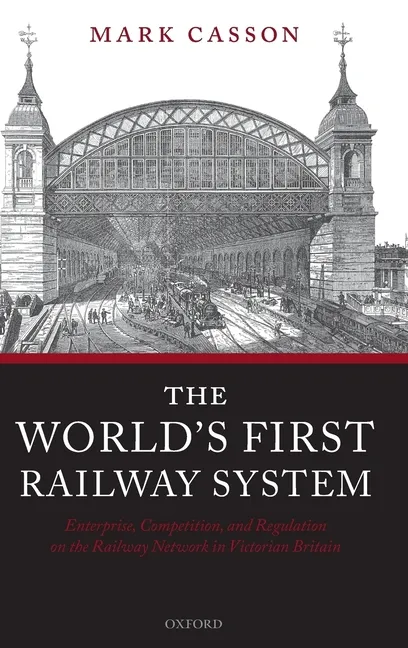
The World's First Railway System
Enterprise, Competition, and Regulation on the Railway Network in Victorian Britain
Report an issue
Tell us what's wrong and we'll take a look.
Thanks – we got it. We'll review and follow up if needed.
This is the first history of the British railway system written from a modern economic perspective. It uses conterfactual analysis to construct an alternaive network to represent the most efficient alternative rail network that could have been constructed given what was known at the time - the first time this has been done. It reveals how weaknesses in regulation and defects in government policy resulted in enormous inefficiency in the Victorian system that Britain lives with today.
British railway companies developed into powerful regional monopolies, which then contested each other's territories. When denied access to existing lines in rival territories, they built duplicate lines instead. Plans for an integrated national system, sponsored by William Gladstone, were blocked by Members of Parliament because of a perceived conflict with the local interests they represented. Each town wanted more railways than its neighbours, and so too many lines were built. The costs of these surplus lines led ultimately to higher fares and freight charges, which impaired the performance of the economy.
The book will be the definitive source of reference for those interested in the economic history of the British railway system. It makes use of a major new historical source, deposited railway plans, integrates transport and local history through its regional analysis of the railway system, and provides a comprehensive, classified bibliography.
Mark Casson
Mark Casson is Professor of Economics at the University of Reading and Director of the Centre for Institutions and Economic History. A Fellow of the British Academy, he has published extensively in the fields of the fields of economic history, international business, entrepreneurship and transport studies.
More by Mark Casson














Why Readwise Books?
Readwise Books is an ebook & audiobook platform that automatically logs how much you and your friends read, making it fun and easy to read more. Learn more →