Report an issue
Tell us what's wrong and we'll take a look.
Thanks – we got it. We'll review and follow up if needed.
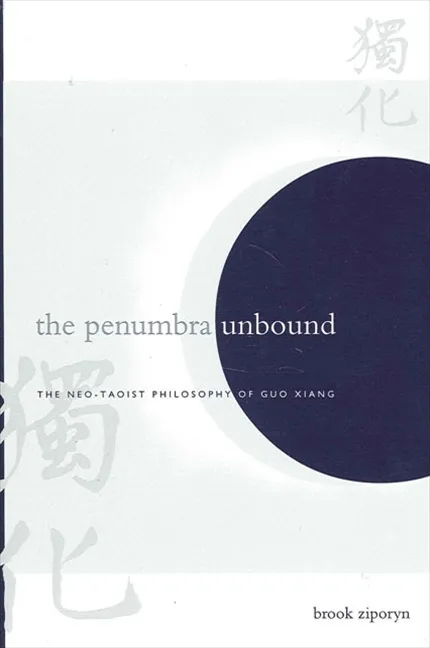
Explores the work of Guo Xiang, a Neo-Taoist thinker who developed a radical philosophy of freedom and spontaneity.
The Penumbra Unbound is the first English language book-length study of the Neo-Taoist thinker Guo Xiang (d. 312 C.E.), commentator on the classic Taoist text, the Zhuangzi. The author explores Guo's philosophy of freedom and spontaneity, explains its coherence and importance, and shows its influence on later Chinese philosophy, particularly Chan Buddhism. The implications of his thought on freedom versus determinism are also considered in comparison to several positions advanced in the history of Western philosophy, notably those of Spinoza, Kant, Schopenhauer, Fichte, and Hegel. Guo's thought reinterprets the classical pronouncements about the Tao so that it in no way signifies any kind of metaphysical absolute underlying appearances, but rather means literally "nothing." This absence of anything beyond appearances is the first premise in Guo's development of a theory of radical freedom, one in which all phenomenal things are "self-so," creating and transforming themselves without depending on any justification beyond their own temporary being.
Brook Ziporyn
Brook Ziporyn is Professor of Chinese Philosophy, Religion, and Comparative Thought at the University of Chicago Divinity School. He is the author of several books, including The Penumbra Unbound: The Neo-Taoist Philosophy of Guo Xiang and Ironies of Oneness and Difference: Coherence in Early Chinese Thought; Prolegomena to the Study of Li, both also published by SUNY Press.
More by Brook Ziporyn


Why Readwise Books?
Readwise Books is an ebook & audiobook platform that automatically logs how much you and your friends read, making it fun and easy to read more. Learn more →