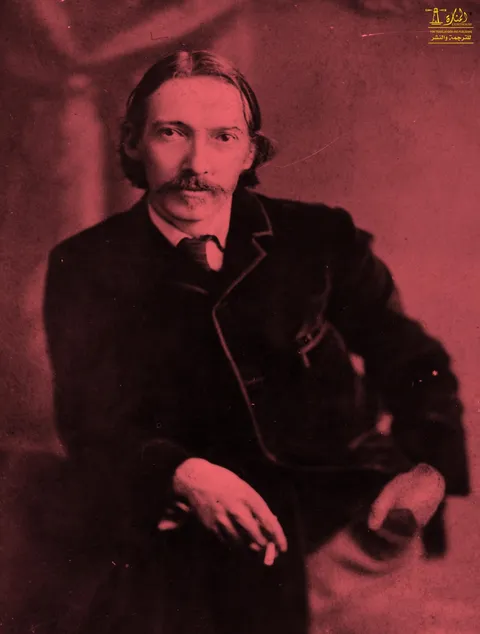
The Old Pacific Capital
Report an issue
Tell us what's wrong and we'll take a look.
Thanks – we got it. We'll review and follow up if needed.
The old pacific capital" (1882) is an account of a journey undertaken by Robert Louis Stevenson in Monterey, Mexico, in 1880. The work is written in the form of essay and in the first part describes in detail the flora and vegetation of the area, considered very impressive by the Scottish writer.
Robert Louis Stevenson, in full Robert Louis Balfour Stevenson, (born November 13, 1850, Edinburgh, Scotland—died December 3, 1894, Vailima, Samoa), Scottish essayist, poet, and author of fiction and travel books, best known for his novels Treasure Island (1881), Kidnapped (1886), Strange Case of Dr. Jekyll and Mr. Hyde (1886), and The Master of Ballantrae (1889).
Stevenson was the only son of Thomas Stevenson, a prosperous civil engineer, and his wife, Margaret Isabella Balfour. His poor health made regular schooling difficult, but he attended Edinburgh Academy and other schools before, at age 17, entering Edinburgh University, where he was expected to prepare himself for the family profession of lighthouse engineering. But Stevenson had no desire to be an engineer, and he eventually agreed with his father, as a compromise, to prepare instead for the Scottish bar.
He had shown a desire to write early in life, and once in his teens he had deliberately set out to learn the writer’s craft by imitating a great variety of models in prose and verse. His youthful enthusiasm for the Covenanters (i.e., those Scotsmen who had banded together to defend their version of Presbyterianism in the 17th century) led to his writing The Pentland Rising, his first printed work. During his years at the university he rebelled against his parents’ religion and set himself up as a liberal bohemian who abhorred the alleged cruelties and hypocrisies of bourgeois respectability.
In 1873, in the midst of painful differences with his father, he visited a married cousin in Suffolk, England, where he met Sidney Colvin, the English scholar, who became a lifelong friend, and Fanny Sitwell (who later married Colvin). Sitwell, an older woman of charm and talent, drew the young man out and won his confidence. Soon Stevenson was deeply in love, and on his return to Edinburgh he wrote her a series of letters in which he played the part first of lover, then of worshipper, then of son. One of the several names by which Stevenson addressed her in these letters was “Claire,” a fact that many years after his death was to give rise to the erroneous notion that Stevenson had had an affair with a humbly born Edinburgh girl of that name. Eventually the passion turned into a lasting friendship.
Later in 1873 Stevenson suffered severe respiratory illness and was sent to the French Riviera, where Colvin later joined him. He returned home the following spring. In July 1875 he was called to the Scottish bar, but he never practiced. Stevenson was frequently abroad, most often in France. Two of his journeys produced An Inland Voyage (1878) and Travels with a Donkey in the Cévennes (1879). His career as a writer developed slowly. His essay “Roads” appeared in the Portfolio in 1873, and in 1874 “Ordered South” appeared in Macmillan’s Magazine, a review of Lord Lytton’s Fables in Song appeared in the Fortnightly, and his first contribution (on Victor Hugo) appeared in The Cornhill Magazine, then edited by Leslie Stephen, a critic and biographer. It was these early essays, carefully wrought, quizzically meditative in tone, and unusual in sensibility, that first drew attention to Stevenson as a writer.
Robert Louis Stevenson
Robert Louis Stevenson was born in Edinburgh in 1850, the only son of an engineer, Thomas Stevenson. Despite a lifetime of poor health, Stevenson was a keen traveller, and his first book An Inland Voyage (1878) recounted a canoe tour of France and Belgium. In 1880, he married an American divorcee, Fanny Osbourne, and there followed Stevenson's most productive period, in which he wrote, amongst other books, Treasure Island (1883), The Strange Case of Dr Jekyll and Mr Hyde, and Kidnapped (both 1886). In 1888, Stevenson left Britain in search of a more salubrious climate, settling in Samoa, where he died in 1894.
More by Robert Louis Stevenson


Why Readwise Books?
Readwise Books is an ebook & audiobook platform that automatically logs how much you and your friends read, making it fun and easy to read more. Learn more →