
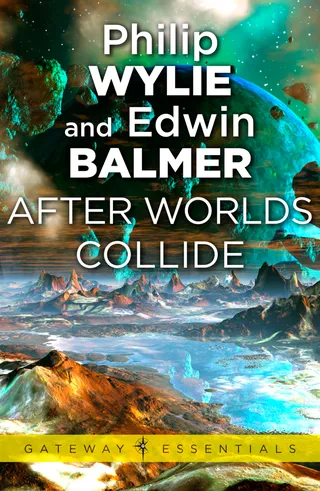
After Worlds Collide
Report an issue
Tell us what's wrong and we'll take a look.
Thanks – we got it. We'll review and follow up if needed.
The thrilling sequel to the apocalyptic bestseller When Worlds Collide. After Worlds Collide (1934) continues the story of the survivors' progress on their new world, Bronson Beta, following Earth's destruction. As American colonists explore the dangerous landscape in two ships, they encounter German, Russian, and Japanese survivors who have also made the journey. Co-written by Philip Gordon Wylie and Edwin Balmer, this classic science fiction adventure first appeared as a six-part monthly serial in Blue Book magazine from November 1933 to April 1934. Though shorter and less elaborate than its predecessor, After Worlds Collide delivers a gripping tale of space exploration and the challenges of starting anew in a perilous environment.
At the Publisher's request, this title is being sold without Digital Rights Management Software (DRM) applied.
Philip Wylie
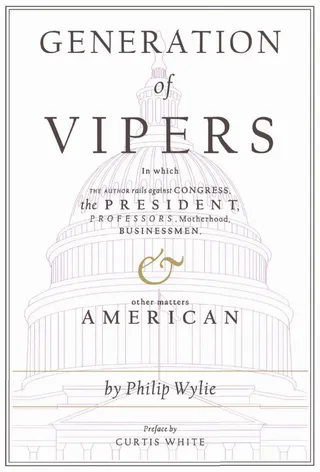
Philip Wylie (1902–1971) was a prolific writer whose work spanned a range of genres from men’s adventure and detective stories to science fiction and social criticism. Several of his novels, including When Worlds Collide, Night Unto Night, and Los Angeles: A.D. 2017, as well as the Crunch & Des stories, were adapted as movies and television shows, and his novel Gladiator is considered one of the inspirations for the iconic character Superman. Wylie was also a commentator on American society. In 1942 he published Generation of Vipers, a bestselling book of essays that attacked the complacencies of the American way of life. His novel The Disappearance presents a dystopia in which men and women vanish from the perception of the opposite sex, allowing Wylie to explore the issues of women’s rights and homosexuality. Wylie recognized early the potentially catastrophic effects of pollution and climate change and wrote both fiction and nonfiction on those topics.
More by Philip Wylie











Why Readwise Books?
Readwise Books is an ebook & audiobook platform that automatically logs how much you and your friends read, making it fun and easy to read more. Learn more →