Report an issue
Tell us what's wrong and we'll take a look.
Thanks – we got it. We'll review and follow up if needed.
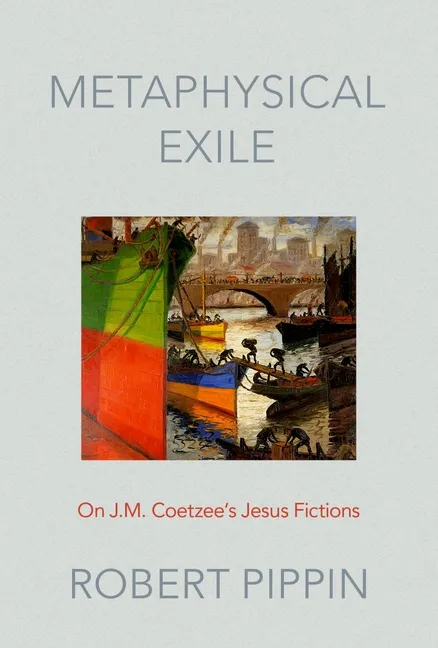
Robert Pippin presents the first detailed interpretation of J.M. Coetzee's "Jesus" trilogy as a whole. In order to understand them, he treats the three fictions as a philosophical fable, in the tradition of Plato's Republic, More's Utopia, Rousseau's Emile, or Nietzsche's Thus Spoke Zarathustra. In the trilogy's mythical setting, everyone is an exile, removed from their homeland and transported to a strange new place, with most of their memories of their homeland erased. Pippin treats these fictions as philosophical explorations of the implications of a deeper kind of spiritual homelessness--a version that characterizes late modern life itself--and he sees the theme of forgetting as a figure for modern historical amnesia and indifference to reflection and self-knowledge. This state of exile is interpreted as metaphysical as well as geographical.
Pippin's insightful, careful reading of Coetzee suggests the limitations of traditional philosophical treatments of themes like eros, beauty, social order, art, family, non-discursive forms of intelligibility, self-deception, and death. And he wrings from the trilogy its intertextuality, and many references to the Christian Bible, Plato, Cervantes, Goethe, Kleist, and Wittgenstein, among others. Throughout, Pippin expresses the potential of literature to be a profound form of philosophical reflection.




Why Readwise Books?
Readwise Books is an ebook & audiobook platform that automatically logs how much you and your friends read, making it fun and easy to read more. Learn more →