Report an issue
Tell us what's wrong and we'll take a look.
Thanks – we got it. We'll review and follow up if needed.
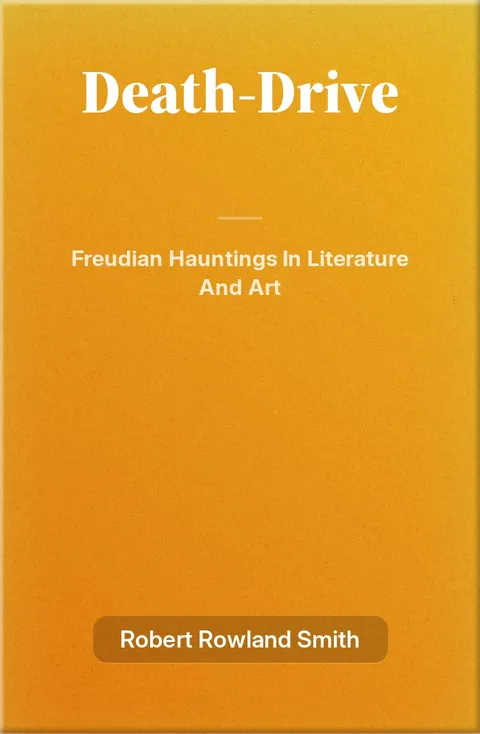
Robert Rowland Smith takes Freud's work on the death-drive and compares it with other philosophies of death--Pascal, Heidegger and Derrida in particular. He also applies it in a new way to literature and art - to Shakespeare, Rothko and Katharina Fritsch, among others. He asks whether artworks are dead or alive, if artistic creativity isn't actually a form of destruction, and whether our ability to be seduced by fine words means we don't put our selves at risk of death.In doing so, he proposes a new theory of aesthetics in which artworks and literary texts have a death-drive of their own, not least by their defining ability to turn away from all that is real, and where the effects of the death-drive mean that we are constantly living in imaginary, rhetorical or 'artistic' worlds. The book also provides a valuable introduction to the rich tradition of work on the death-drive since Freud.
Robert Rowland Smith
A former Prize Fellow of All Souls College, Robert Rowland Smith has written widely on philosophy, psychoanalysis and literature, including Derrida and Autobiography. He is a founding editor of the award-winning journal, Angelaki and an original member of the Forum for European Philosophy. Now independent, he also writes non-fiction that applies philosophy to everyday life. His latest book is Breakfast with Socrates: The Philosophy of Everyday Life (Profile Books, 2009).
More by Robert Rowland Smith


Why Readwise Books?
Readwise Books is an ebook & audiobook platform that automatically logs how much you and your friends read, making it fun and easy to read more. Learn more →