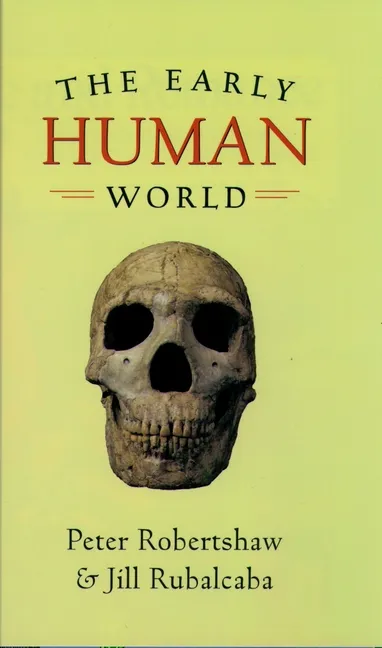
Early Human World
Report an issue
Tell us what's wrong and we'll take a look.
Thanks – we got it. We'll review and follow up if needed.
Peter Robertshaw and Jill Rubalcaba tell the story of early human life using an incredible variety of primary sources: 3.5-million-year-old footprints preserved by a volcano provide evidence of our ancestors' walking on two legs. Stone flakes fashioned 2 million years ago prove early hominids used tools. Bears, lions, and rhinoceroses painted in a cave 30,000 years ago reveal our ancestors' artistic side. An 8,500-year-old dog grave shows the extraordinarily long history of man's best friend. This evidence helps archaeologists decipher not just how we came to be the Homo sapiens we are today, but also what life may have been like for our earliest ancestors. The first Australians encountered freakishly gigantic beasts: kangaroos as big as houses and tortoises the size of cars. The Sahara Desert was once a fertile land, supporting herds of cattle, sheep, and goats. The Early Human World takes readers to sites around the world as archaeologists piece together the clues to our past.
Jill Rubalcaba
Jill Rubalcaba, author of A PLACE IN THE SUN, UNCEGILA'S SEVENTH SPOT, and ST. VITUS' DANCE, lives in Haddam, Connecticut.
More by Jill Rubalcaba













Why Readwise Books?
Readwise Books is an ebook & audiobook platform that automatically logs how much you and your friends read, making it fun and easy to read more. Learn more →